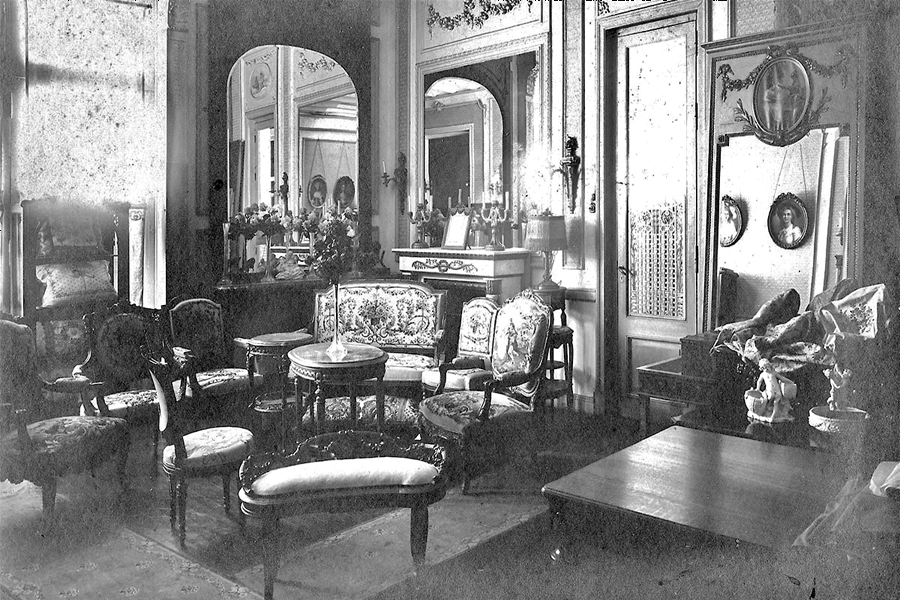
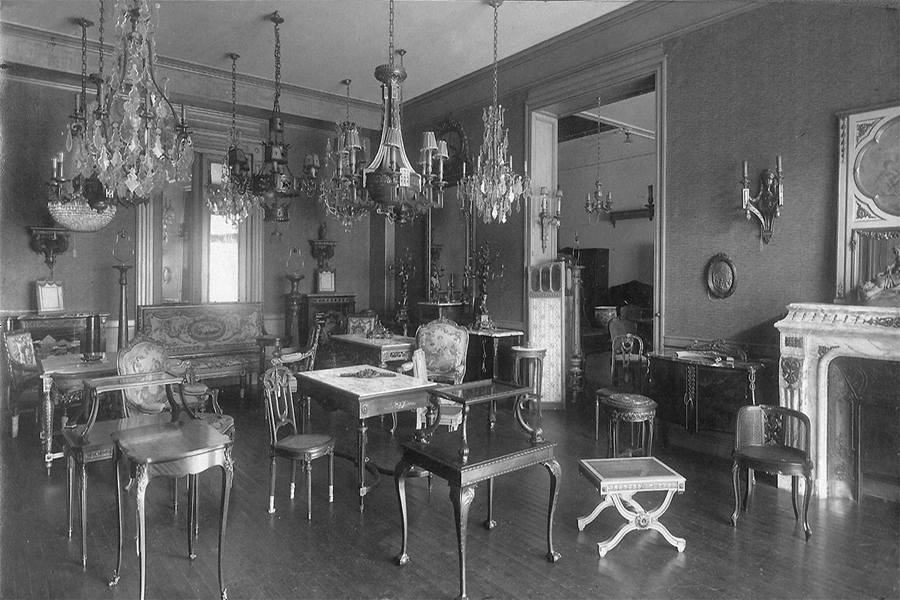
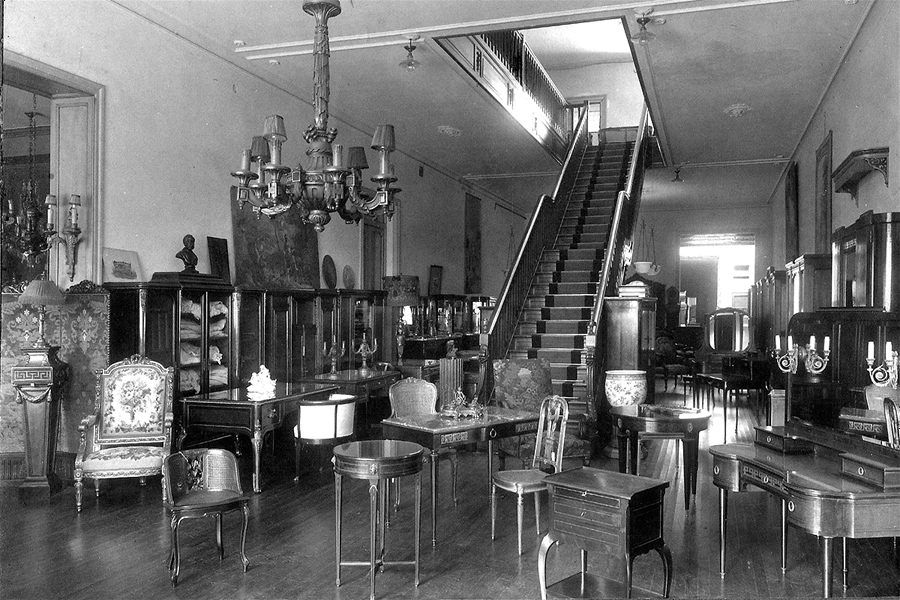
We had three shelving units suspended from the wall in our show room and a certain Mr. Verzura (upholsterer) asked for the price of these pieces. I offered them to him at a reduced price of 120 pesos and he immediately bought them. In his workshop he upholsters them with shiny fabric and takes them to the Guerrico and Williams auction house where he gets a final price of 730 pesos, having invested 310 pesos. The next day he asks me for another three pieces and I ask him for 140 pesos. Griet Bros (657 Alsina) orders a furniture set, and in this way I start to receive many more orders over the following 6 months before the revolution of 1890. I work for such companies as Libeau, Trochu, Bergada, Toppi y Mafiolini, Guanziroli, Cortés, Sansa, Pastore & Pino, Luraschi, Herman, Rocca & Martinelli, etc. The Luis XV shelving units were an extraordinary success, having built around 150 pieces with the help of my excellent Spanish workers from Barcelona; Pedro, Francisco and Serra and with the Frenchmen Auguste, Jean and Fite.
The revolution of 1890 takes me by surprise
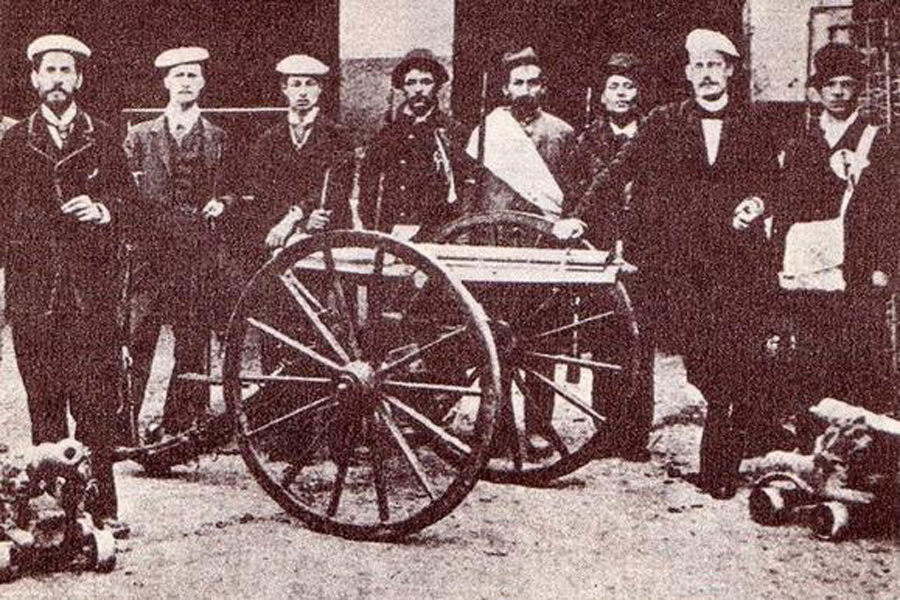
On Saturday, July 29th at 7 o’clock in the morning we heard the first shots coming from all directions. I wanted to go out at 10 in the morning but my landord’s family and my wife prevented it. Soon after we saw numerous police officers and wagons full of corpses. None of the workers came in to work and during the night canon shots were heard. On Sunday morning a projectile from the navy landed on the house across the street (183) making a hole 2 metres in diameter and destroying the legs of a child sitting close to its mother. She was unharmed despite being covered with debris (Miracle!). Mi wife, in tears, begged me to abandon this country in which bloody savagery took place. This state of affairs lasted four days, ending with the resignation of president Juarez Celman and the takeover of power by the vice-president Carlos Pellegrini who promises in his speeches all the best for the country and a stable peso, that at the time was worth nothing. A week later all the orders I had received were cancelled. Government bonds were not worth anything and the provincial bank remained closed. I had at that time 17 furniture sets ordered. Payments were made bi-weekly at one third of the total price which had been habitual before the revolution. Some clients would pay at month end and for example Simonetti would always pay cash upon delivery. After the revolution I accepted any terms; even installments of 10 pesos, as the bi-weekly price was too high. It was a bad time for us that went on for three months. One Saturday on which I was quite busy, things suddenly changed. It seemed like all my clients had conspired to pay me at the same time. That night I had in my hands 4,000 pesos! My wife changed her mind wishing now to stay in the country. And work picked up. 1891 to 1897 were good years. Mr Otto Bemberg ordered a Luis XV golden bed for his wedding with Ms Elortondo. I aksed him for 980 pesos believing this was too much, but he immediately accepted. I found out later that this gentleman had obtained my address from the renowned fabric retailer Montes, who in turn had obtained it from the famous French upholsterer Herman. Days later Montes asked me the price of the bed. When I told him it had been 980 pesos, he insulted me and called me a madman telling me I could of sold it for 1800 to 2000 pesos. The fault was his for not telling me about the wealth of my client.
This was a lesson. Montes was ready to send me clients for a commission of 20% and I offered him a maximum of 10%. Thanks to the upholsterers Maraval y Pellegrin, my next client was Nicolas Avellaneda, who ordered a Luis XV walnut dining room set with a number of carvings. Mr Avellaneda had unsuccessfully made inquiries at all the large furniture stores in Buenos Aires. Duprez made the design which was accepted immediately at a price of 1800 pesos. And thus new clients continued to appear. Two years later I had so many workers I was thinking about moving again. I found a building on Belgrano street (1847) and we took it immediately as I wanted to install new machinery that would be powered by electricity. The power lines would run along this street to supply the Spanish hospital with electrical power. After numerous dealings I obtained a connection to the grid, which was the first one in the South end of Buenos Aires.