Review and memories of our landing in Buenos Aires on November 30th, 1888.
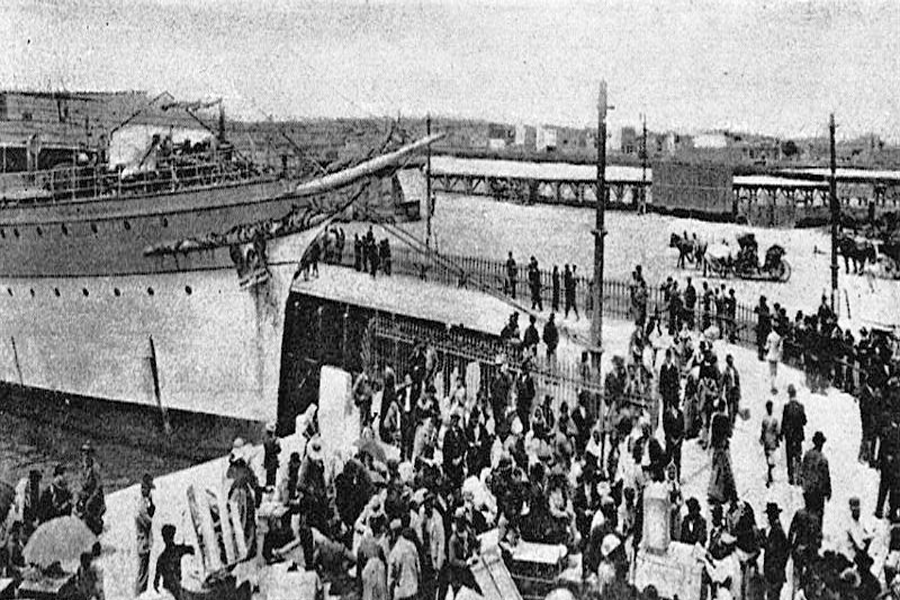
We docked at 6:30 in the morning, after a painful trip a board the Belgrano ocean liner, a 3500 ton vessel that was made to dance in the winds like a cardboard box. Our so called 1st class were 4 bed compartments for a total of 40 passengers at a discount price offered by the Argentine government. The rest of the immigrants traveled in the lower deck on 650 stacked beds. The food was quite acceptable considering we were at sea. On that very fresh morning, a tug boat towed us across from the extension of Maipu street. That is where the hotel for immigrants was located (a 2 floor round building made out of zinc). The main floor was home to the customs office, the passport office, a police station and huge storage areas for immigrant luggage. The first floor was accessed by means of 4 ample staircases which lead to the dinning room, with benches and tables made out of wood planks supported by wooden trestles. The other half of the floor held the bedrooms for women and children, and on the second floor the bedrooms for men over 10 years of age. A single look around was enough to determine that this hotel did not suit us in the least. Someone recommended the Pirineos hotel on Suipacha street at its intersection with Viamonte. Monsieur Dieve (who we had met on board the Belgrano) and myself decided to go on a tour in search of the hotel to then return and pick up our wives. At last a good dinner and a good night’s rest! We were had during the currency exchange and the first pennies I gave my wife were stolen the next day from her basket. The currency was truly repugnant. During the second day we had to find the Auzeill family which had left 40 days before us. We met at the French consulate, 756 Moreno street.
From France I had brought some good tools in addition to my luggage, all of which was transported to this address while we waited to find housing accommodations, which was very difficult due to the daily arrival of immigrants. Luckily, after two days I made an agreement with one of the tenants to take one big room in that same old house, with a 6x6 (metres) patio.
This house had served as a school for the children of its owner, who was Dr Avellaneda, ex-president of the republic. The monthly rent was 35 pesos. Then I divided this room into two rooms and I transformed the one with the most light into my workshop.
During the following days I concentrated on finding a workbench, with no luck, I bought a large sheet of wood to replace it at least temporarily. First I built a sofa upholstered by myself. Anyway, time goes by and we get along as we can. Auzeill’s daughters find work during the first days with a French seamstress located on 648 Victoria street earning decent wages. Jean Ecasany, the barber, lived in the same house who months later would marry Marie Auzeill. Her sister Josephine later married Jean Ecasany’s cousin, employed, founder of a exchange brokerage which would allow him to make a fortune like all others in that occupation; rapidly and without a conscience. My first days of work saw the construction of 1 table, 3 benches and other comforts.
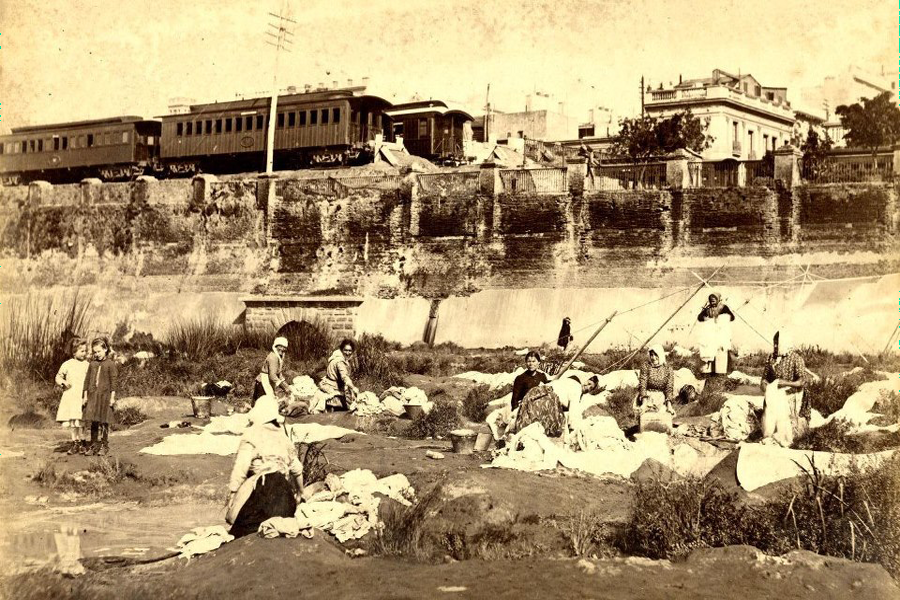
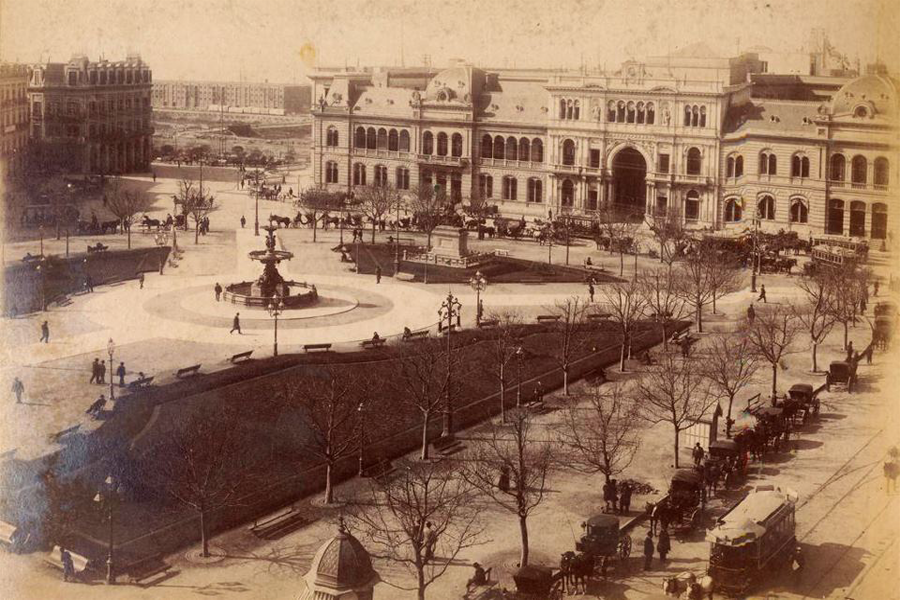
The jobs offered to immigrants by the Argentine government were of a grand scale, in particular the construction of pipelines, sewage and leveling of city streets. In addition to this the Police Department was being built, as well as sidewalks and the first railway tracks from a station situated on the premises where years later the “Teatro Colon” would be built. The trams pulled by horses were terrible on rainy days. The plans for the construction of the new port presented by the French were not approved and instead the “Madero” plan was adopted. The railway passed 20 metres in front of the presidential palace and was eliminated before the construction of the Alem and Colon avenues which started years later.