For this purpose I went to Toulouse. They were asking for a 50 franc fee and 15 days to complete the analysis. At last the results arrived which were very positive as this wood was considered superior to the oak and the chestnut, above all because its bitter taste could only improve the quality of the wines. Also the price was one quarter of the other two. Merelle traveled to Paris to buy a portable saw, but they did not have this machine in Paris and we were forced to wait a month to get it. We had the designs ready and time was going by. Song waited for the delivery until it was too late; Tomba, not wanting to wait any longer, had closed a deal with a north American company that was willing to deliver the goods quickly and at a better price. When I received the news, great was my disappointment. What to do with all the purchased wood? Non the less we were able to supply the local fruit industry, building fruit boxes, highly appreciated for their light weight and strength. A stock was produced with the prescribed measurements and several wagons were sold at a very good price. To carry on with this project I went to Perpignan. I rented a wooden shed with zinc roof and 8 wagons for distribution, but one night they set fire to my entire operation and despite the help of the firemen, we lost everything. Very unhappy and very furious I thought about my company in Buenos Aires. I had only received one letter from Molinari with bad news. Things were going like a candle burning at both ends. I had to complete the exploitation of Carolina pine trees for the state owned match factory and my wife took charge of this business and liquidating what was left. I separated from Merelle and finally left on my own to Buenos Aires without further delays.
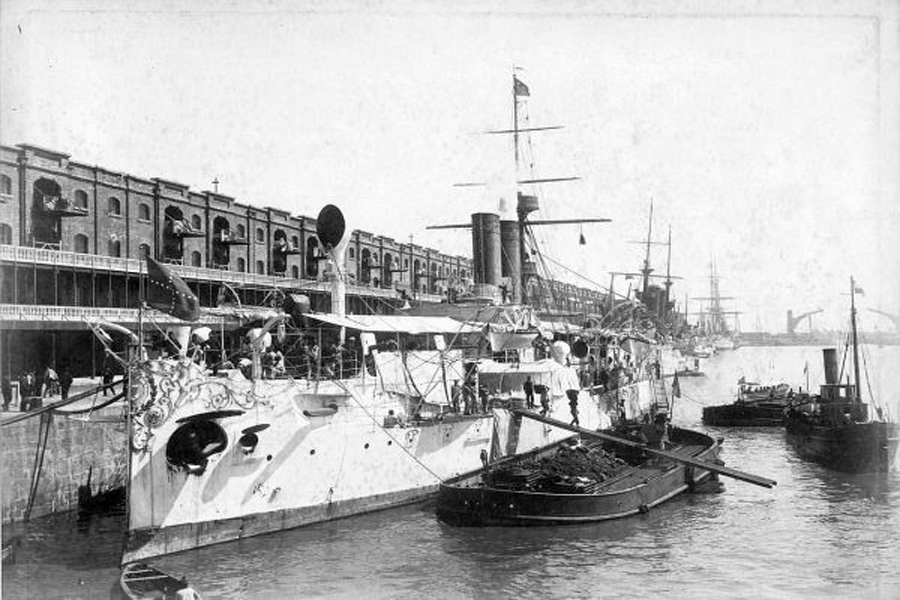
Before leaving, Mr. Jonquières d'Oriolas, great wine producer from Rousillon, asked for information about Argentina, and very interested by my comments, suggested we establish a wine business in the capital. I replied that good wines don’t withstand long ship journeys, but he insisted in sending me 100 barrels to Buenos Aires for me to sell. We agreed on prices and margins and he assured me that the strong wine from Rousillion would withstand the long voyage, specially prepared by a specialist from Bordeaux. He had two types available; Calvet and Dassaud. I replied that this would only be a trial, with no responsibility on my part. I had already lost too much money in the barrel business. On February 10th 1902 I left for Buenos Aires leaving my wife in charge of liquidating all unfinished business in Ceret, including the sale of tools and machinery.
Mi return to Buenos Aires was my only consolation
Just landed in Buenos Aires the first days in March, everything looked beautiful, specially because of my love for work and my efforts to advance. I have visited many clients and I wished to rid myself of those that had bad debts. I also wanted to fire Molinari. I went to visit Lehoux (the gold plater) and told him about my latest adventures in France. I offered him a barrel of wine from Rousillion that was to arrive soon, but he replied very politely that he preferred chianti which he bought from señor Perotti. I also told him that my lease of 1848/52 Moreno street would soon be up and that I was looking for a large house with retail space and in a more central location. From the wine that arrived I took 11 barrels. The rest went bad during the journey and that is how 89 barrels went to increase the volume of the “Rio de la Plata”. Mr. Lehoux told me that a certain Mr. Perotti, in addition to wine, dealt in real estate. He came to visit me a day later to offer me a property on 647 Loria street with a building good only for demolition. This property belonged to the negro Izquierda who had just won a case against the municipality which wanted to take possession of said property. We agreed on a down payment of 6,000 pesos and 4,000 pesos every three months over one year for a total of 22,000 pesos. The titles were verified impeccably by Dr. David Tezanos Pintos and from that moment on I was able to evict the previous owners. Without wasting time I started to draw the workshop, the shed and the first floor for the workers. I divide the land in two; 30 metres for the shop and 20 metres for the store, offices and living quarters for the family on the first floor.