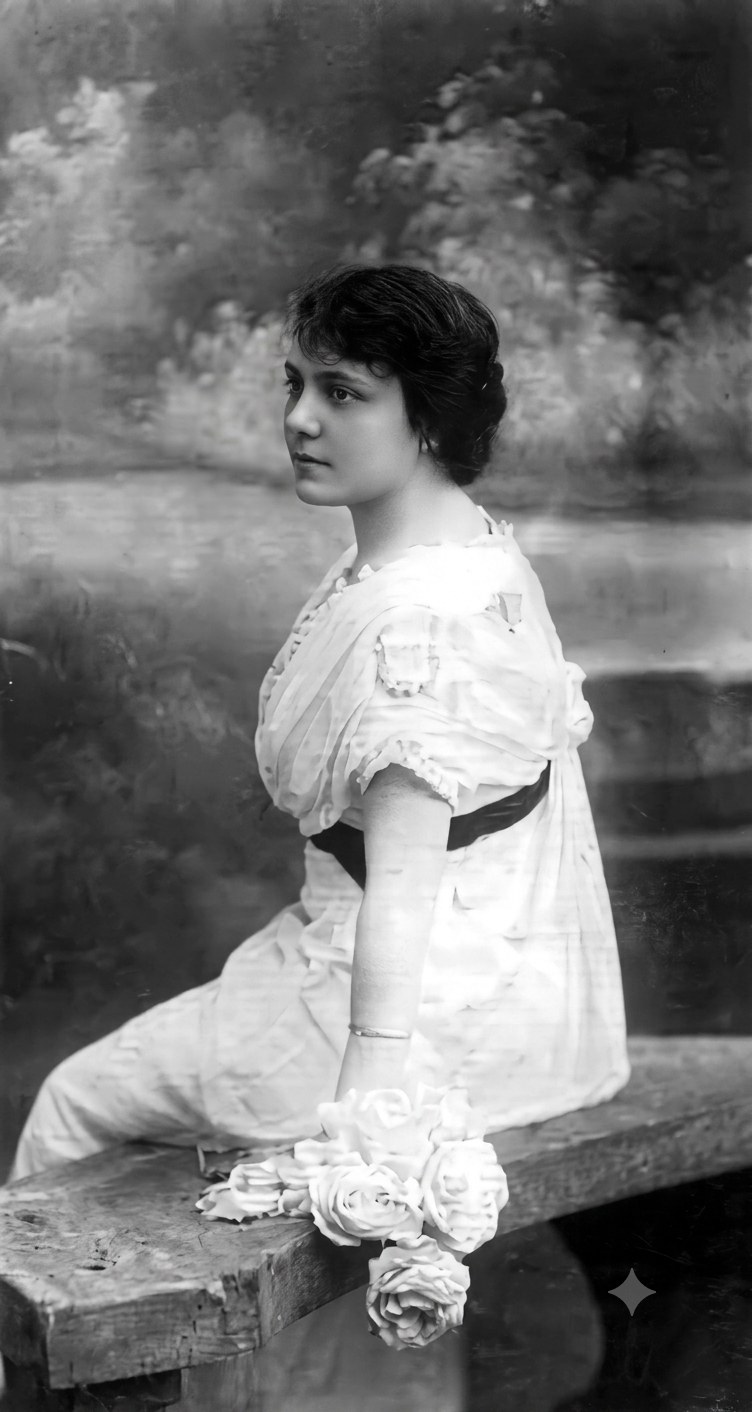
Delia
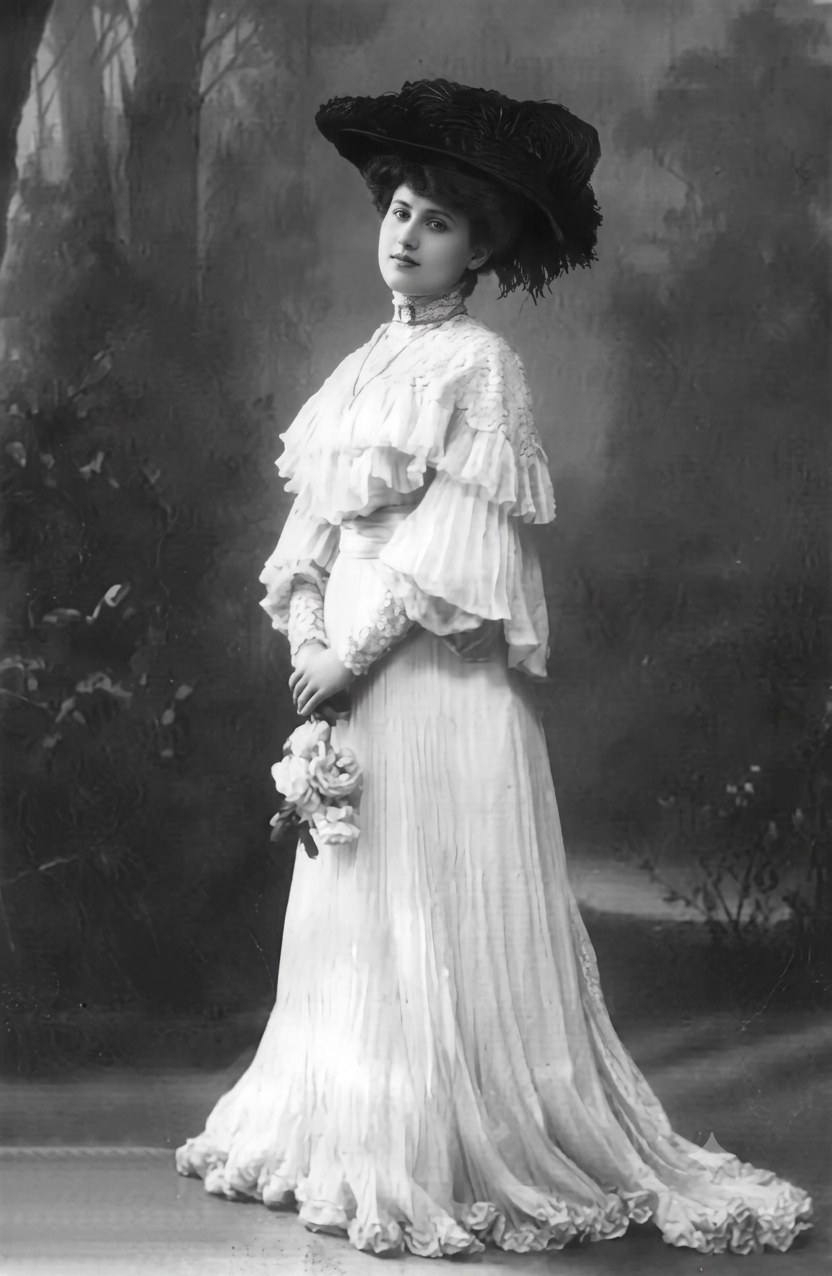
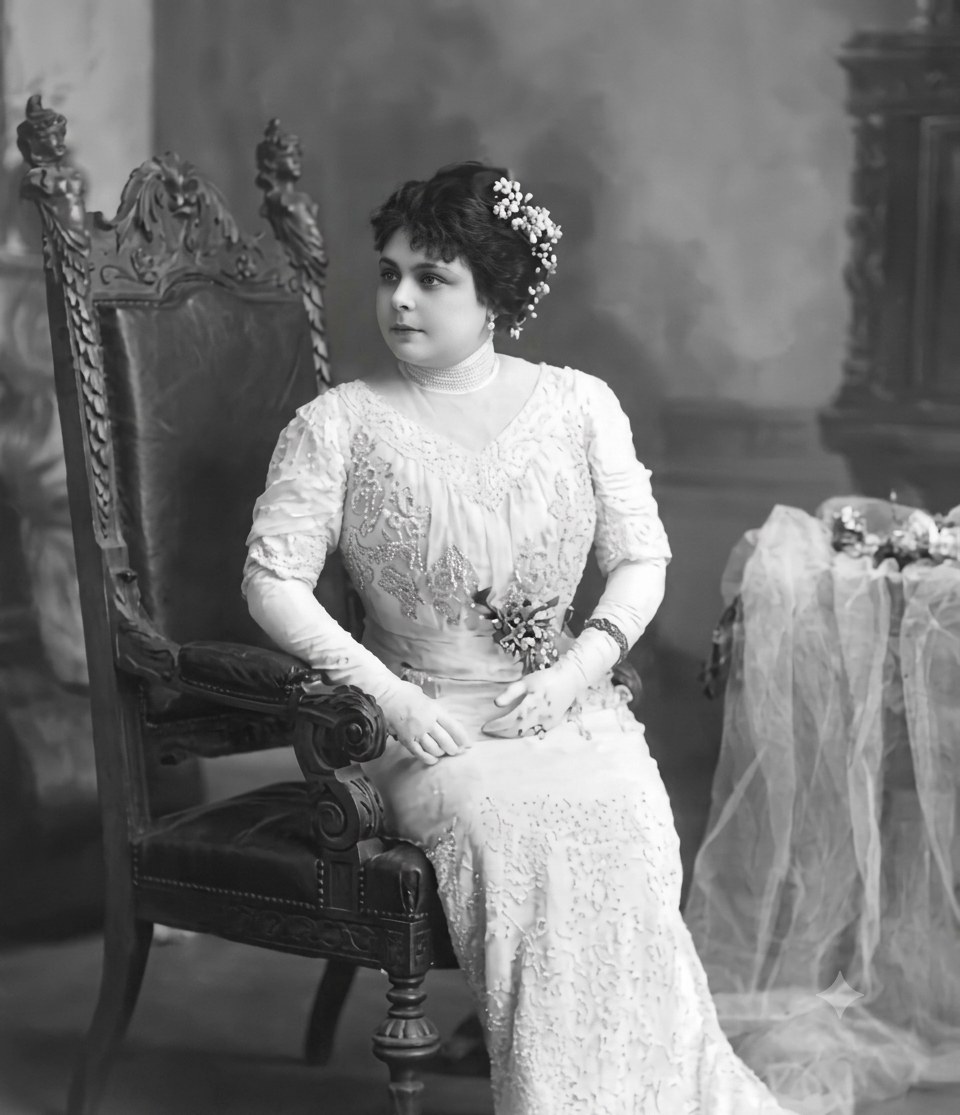
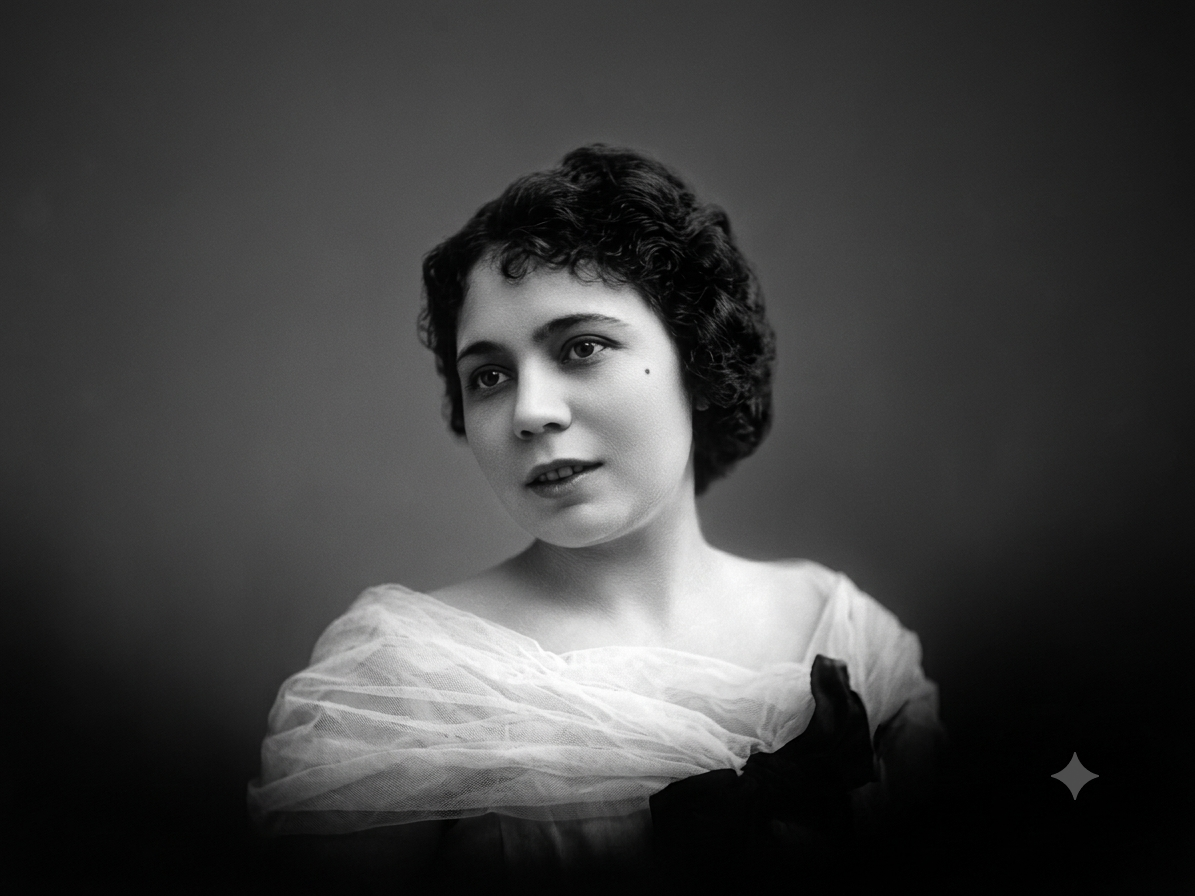
She was born on March 25, 1885 and was baptized Josefa Delia . The great-grandparents already lived in Capital, at 740 Chacabuco Street.
She married the Uruguayan Arturo Walder , a son of Swiss parents who had a foreign exchange brokerage in Montevideo. It was a happy marriage that had only one son, Arturito , born, like Nené Roux, in 1913. Tío Arturo was in a very good economic situation and they lived in a beautiful house in the Montevideo neighborhood of Pocitos. Imagine if the house that appeared in several magazines of the time would be important, of which I had the opportunity to see one that Aunt Delia kept. I also saw the house, when it was already unoccupied and deteriorated, and it was huge, English-style, with a fence and a small garden at the entrance of which, already feral, was the largest rose bush I had ever seen until, three decades later, I visited Sintra, in Portugal. The house had three floors and a number of rooms, of which I remember the immense dining room, which preserved the original "boisserie". The furniture in the dining room of San Mateo's house and the furniture in the dining room of Aunt Gilda and Nené's apartment were from that house.
Uncle Arturo died of heart disease when Arturito and Nené were in their early twenties. Arturito tried to continue with his father's business but, barely prepared for practical life as was proverbial for the men in the family, after a short time he almost bankrupted it. Faced with this situation, Aunt Delia decided to return to Buenos Aires and the business was run by the young Nené, renamed "Walder & Roux, exchange brokers", making her the first female exchange broker in Uruguay. Nené told me that her beginnings were difficult and that she often had to skip meals, but she got ahead with the brilliance we know. Despite everything, he did not change the name of the business, which remained unchanged until his death.
Aunt Delia was a great lady. Although I knew her when she was old, she had a rather imposing appearance. She was somewhat plump, rather short, with dark skin and black eyes. She had a very beautiful voice that, despite being rather deep, when she sang reached surprising highs due to its purity. He always dressed in black. She was very flirtatious: she wore her hair, which was completely white, long to the middle of her back and combed upwards in a high bun that she held back with an invisible hairnet. She invariably wore pearls and a chain with a crucifix. In so many years I only saw her "deshabillé" once and that's why I can tell you about her hair.
It was a very funny thing when Aunt Delia got into making arrangements. Aunt Quita also got involved and between them and Etel they began to take packages out of the closets and it was as if a door to another time had opened. Anything could appear: Uncle Arturo's jacquets or fumoirs, old gold pocket watches, vest pencils, tiny penknifes, long lace underwear, photos, letters, rosaries or necklaces to name just a few things I remember. In these "arrangements" appeared old magazines in which our great-grandfather appeared, Aunt Delia's house, comments on Aunt Quita's concerts, collections of diaries from the time of the abdication of Edward VIII of England or the memoirs, in installments, of Ekaterine Schraat, the former lover of Franz Joseph II of Austria. An added attraction was that they used to give me something that they wanted to keep in the family, like our great-grandfather's cane or things that had belonged to my grandfather.
Aunt Delia had a strong character, despite which she was fun and easy to get along with. To be precise I would describe her as very quick to get angry, not at all spiteful and equally quick to calm down and act as if nothing had happened. I remember one time I was talking calmly with Aunt Quita and suddenly we heard Aunt Delia scream. As soon as we were silent we felt that he was saying: "Enough of this. pray, Delia, you prayed for the living, for the dead, for the souls in purgatory, enough praying!" We looked to see if she was with someone and no, it was because she had gotten angry with herself... Once again we were having dinner Together with Arturito and Aunt Delia, she talked about the times at her house in Pocitos and Arturito and Nené's adolescence. Making a comment about one of the maids, she said: "That bandit must have smoked secretly, because I found pots in the pots." Suddenly he looked at Arturito and asked him, " or was it you?" Don't lie to me, Arturo, don't lie to me...! "Although Arturito, who had a cigarette in his hand, patiently explained to her that at that point in life he had no need to hide when he had started smoking, Aunt Delia was not convinced and, irritated, went to sleep the night before. snap.
Lunches at the aunts' house were quite a solemn occasion. Since I was nine or ten years old I went to lunch one fixed day a week. The food, which I cannot remember without shuddering, generally consisted of watery soups, boiled rice with a light tomato sauce, also boiled, small, dry steaks, and the inevitable tasteless compotes. Etel was the one who cooked, assisted by a young maid named Rosita, and fortunately there was a pearl on her hospital menu: chard fritters. Etel's wonderful chard fritters deserve to be remembered because they were light, with a lot of dough that was almost foamy because it was so spongy, with a marked flavor of Parmesan beneath which appeared, more like a vague intuition than a certainty, a delicate touch of garlic. Every time I had to go to eat at my aunts', they were my hope, cousin: will there be today? How long has it been since we last ate them? were my reflections throughout the trip to the house on Pasaje San Mateo. In contrast to the food, even at daily lunch the table had a large setting: cutlery for each dish and dessert, glasses or cups for water and wine, and a tablecloth and linen napkins. If there was no one else, Aunt Quita, Aunt Delia, Aunt Amanda, Arturito and I would sit at the table in fixed places, attended by Etel and Rosita. Next to their glasses the aunts had the collection of pills that they had to take before, during and after meals.
I remember a curious detail: the aunts, instead of bread, ate large semolina cookies and Aunt Delia, despite all her finesse, had the invariable habit of breaking hers with a sharp, loud and strong punch.
Those lunches helped polish my somewhat stubborn manners. Aunt Delia wouldn't let you pass one and was always oblique to correct. For example, if I raised my elbows he asked me, do you want to fly, baby? or if I slumped in the chair the question was, are you very tired? always in a tone as polite as it was biting. I can assure you that those observations were much more effective than the classic Italian challenge.
For me the best time was after eating, when everyone was taking a nap. Then I would grab a book from the library and lie down to read on Aunt Delia's chaise-longue. Since there were all kinds of books in the aunts' library, including those of Arturito when he was little, it had the rare virtue of interesting me from the age of nine or ten to the twenty-something I was when Aunt Quita died. Some of the books were magnificent, like the "Commedia" illustrated by Doré and others pleasantly surprised me, like when in an incipient and modest adolescence I discovered the uninhibited humor of Aristophanes.
The aunts were fond of cards, especially Aunt Delia. When I was a kid we played "dirty ass", then we moved on to "broom" and finally they taught me to play "basketball". She wasn't a good loser and if she lost several hands in a row she would get angry and start asking me if I was cheating.
Despite all her devotions, Aunt Delia was not as puritanical as Aunt Quita and allowed herself from time to time some more or less off-color double meaning. She wasn't innocent either. Rosita, the maid who, along with Etel, looked after the aunts, was a girl from the interior of a German family. She was frankly ugly, but she had some very pretty sisters who used to visit her. One summer, when I was fifteen or sixteen years old, his sister Alcira had gone to spend a few days, a beautiful girl in her mid-twenties, Austrian type, opulent, very white skin, light brown hair and green eyes. This girl had the idea of going to sunbathe at the river on a cloudy and cool day, she didn't feel the heat, she stayed on the beach all day and with that white skin she got a serious burn. The point is that she had to stay in bed, creamed from head to toe and with minimal clothing. She was in an upstairs room, so when I got to the aunts' and they told me about the mishap, I went up to greet her. I suppose that Alcira would be very bored by having to spend her vacation days in Buenos Aires in bed and my visit represented an opportunity for her to distract herself so, from commenting on the unfortunate incident, she went on to show me how much she had been burned and teach me the difference. of color between its burned parts and those that had been protected by the mesh. My increasingly growing interest in the patient's suffering, which reached its maximum when I glimpsed the portions of skin that the sun had not touched, was abruptly interrupted when Aunt Delia's voice, calling me peremptorily, caused a rise of sheets that, As a curtain, it told me that the exciting show was over. When I came down, putting on my best "nothing has happened here" face and commenting on how sorry I was for the girl's suffering, Aunt Delia asked me point blank if my fly was open. Like a flash of lightning I put my hand to the opening in question and was relieved to see that the buttons and buttonholes were fully and perfectly fitted. Aunt Quita's reproach to her sister ("Delia, don't talk to the boy about those things!") saved me from what promised to be a very embarrassing interrogation...
Over the years she became deaf. This isolated her quite a bit since it prevented her from following normal conversations although she would listen if someone spoke to her in a loud and clear voice. As she was the one in charge of setting up the tree and the manger for Christmas, she acquired the hobby of making silver paper decorations. She was quite skilled and we were all ordered to save and bring her the paper of the chocolates, alfajores, etc. which she kept carefully and used for her hobby. Naturally, her production, which grew over the years, far exceeded her needs and we all ended up taking some decoration with us every time we visited her.
His memory was excellent and he never lost it. The "Plasticola" had just appeared and I told him that it could be practical for his blessed little ornaments. Aunt Delia immediately asked me to buy her a doorknob. I forgot about the order and a few days later they told us that he was very ill and that they did not believe he could be replaced. When I arrived at his house they told me that he was semi-conscious and that he no longer recognized him. Anyway, I approached the bed to kiss her and told her: "Aunt Delia, I'm Augusto . " To everyone's surprise, Aunt Delia opened her eyes and said to me: "Baby, did you bring me the Plasticola?" . Needless to say, I lied to him...
During the days that her agony lasted, despite not being completely conscious, she did not allow herself to be undressed. On the contrary, she had to be dressed up, with her jewelry and even her shoes until the moment she died. It was in 1966.