Memories of the Pugliese Family
Sent: Saturday, October 13, 2001 12:06 am Subject: Answering the Pugliese family
Dear Ana Ines,
Thank you very much for your letter. Suddenly, I have a folder full of messages from Pugliese relatives, many of whom I did not know. The genealogical tree that just came to me sorted my ideas out a bit. But there are so many that I don't know. The bottom line is that I'm glad we're all in touch now. Until 15 days ago, we were three relatives in Buenos Aires. And we thought we were alone. My sister Mabe l, my cousin Maria Amelia and me. Now suddenly it is a large family.
Let us begin. My mother, whom you call Bicha, was called Luisa Camps. My current wife is called Franca Beer. With my first wife, Lina Guccerelli, I had a daughter, Alejandra. My current wife has a son from her previous marriage, named Roberto Pera. Mabel's husband, who recently died aged almost ninety -two , was named Hernan Bares. They had two children: Guillermo Alejandro Bares, who married twice. First with Gladys Luzzi with whom he had a daughter, Samanta. Then with Laura Wilder with whom he had a daughter, Renata Cecilia. The second son, Alfredo Bares, married Sonia from whom he is separated. They do not have children.
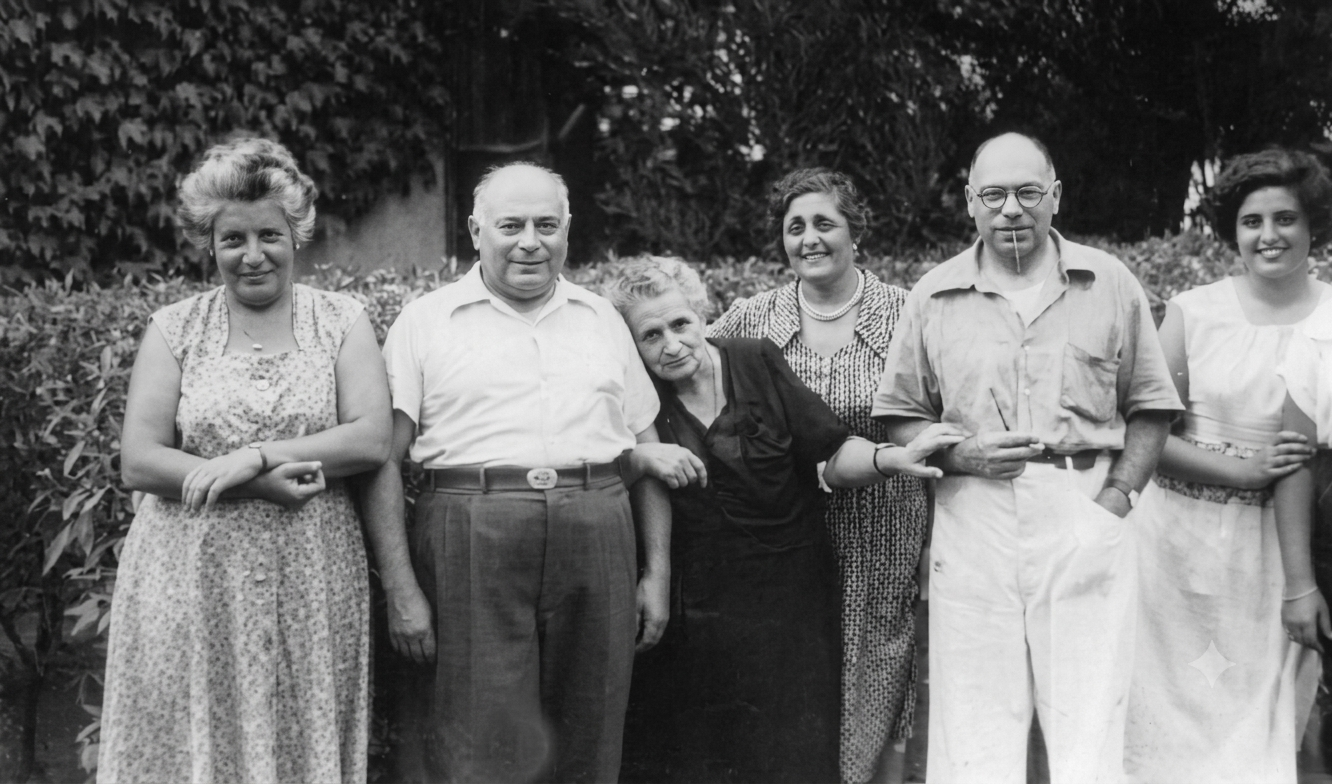
My childhood memories of the Pugliese: my grandmother Maria, the calmest and sweetest woman in the world. She must have been very beautiful because even in old age she was pretty. Even today I remember her face clearly.
Tancredo
Tancredo: For long periods at a time he came to my parents' house every day. My sister and I were unsettled by a strange wig he wore. And as he fell asleep in an armchair, we tickled the hair with a stick under the wig. He sang opera areas all day which he knew by heart, and sometimes Schubert songs without the lyrics. I loved this and I remember it very well. He admired Wagner, who he called "uanier" I don't know why. At one time my father loved him. One time when my father made the mistake of opening a pizzeria (because he wasn't a pizza maker) he put him on the till. Tancredo used to smoke cigars and drink.
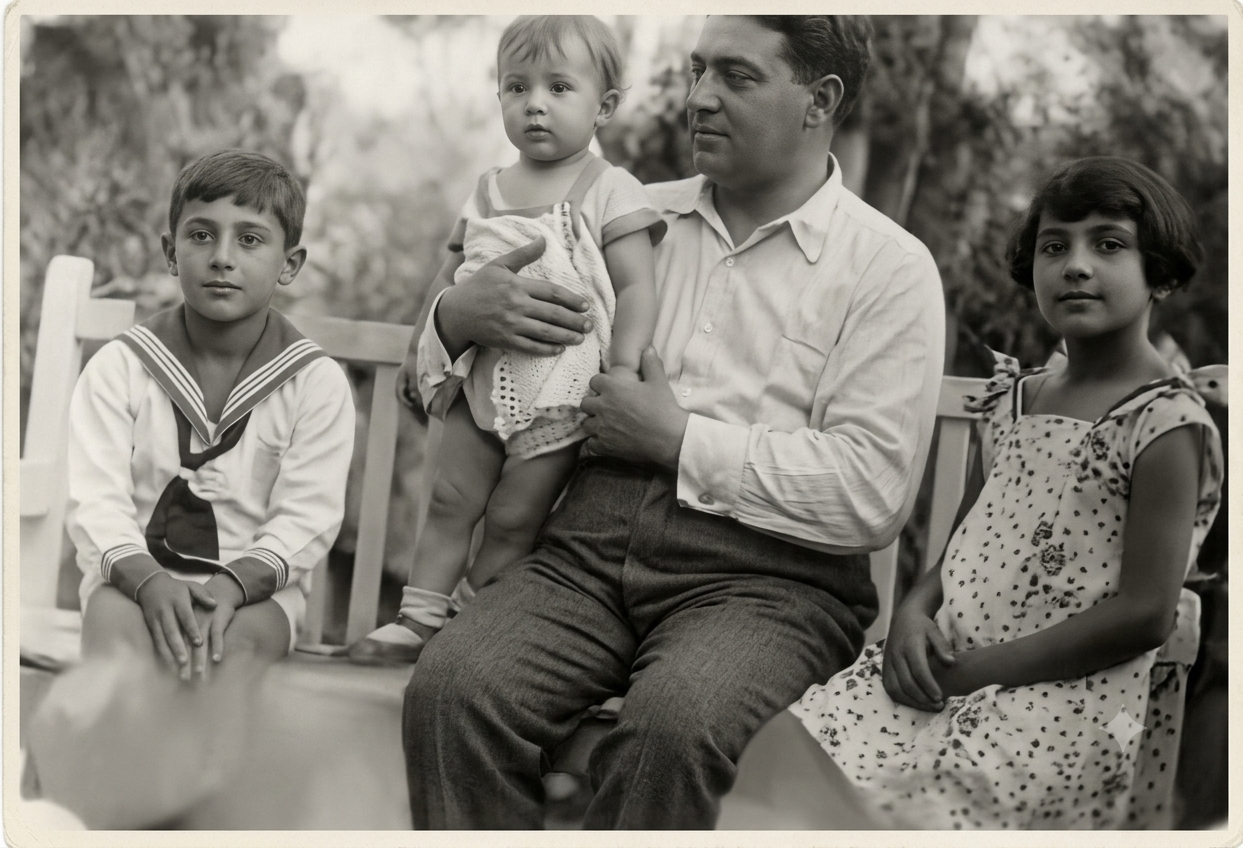
Pedro
Pedro: I remember him blond, light coloured eyes, handlebar mustaches and red faced, he would always be laughing. He had a great sense of humor. He was terrific to me.
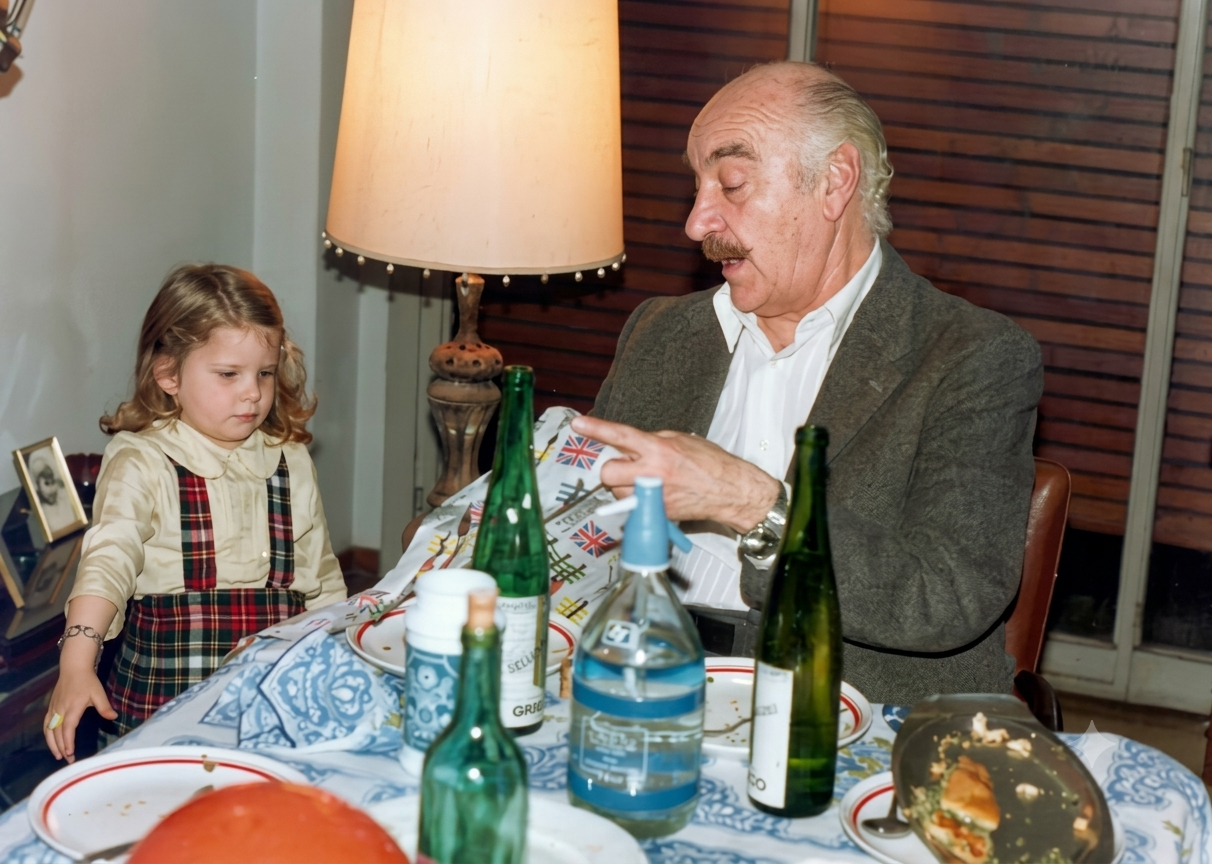
Rosa
Rosa: She was exuberant. Today one would say sexy. So white. She always had talcum perfume
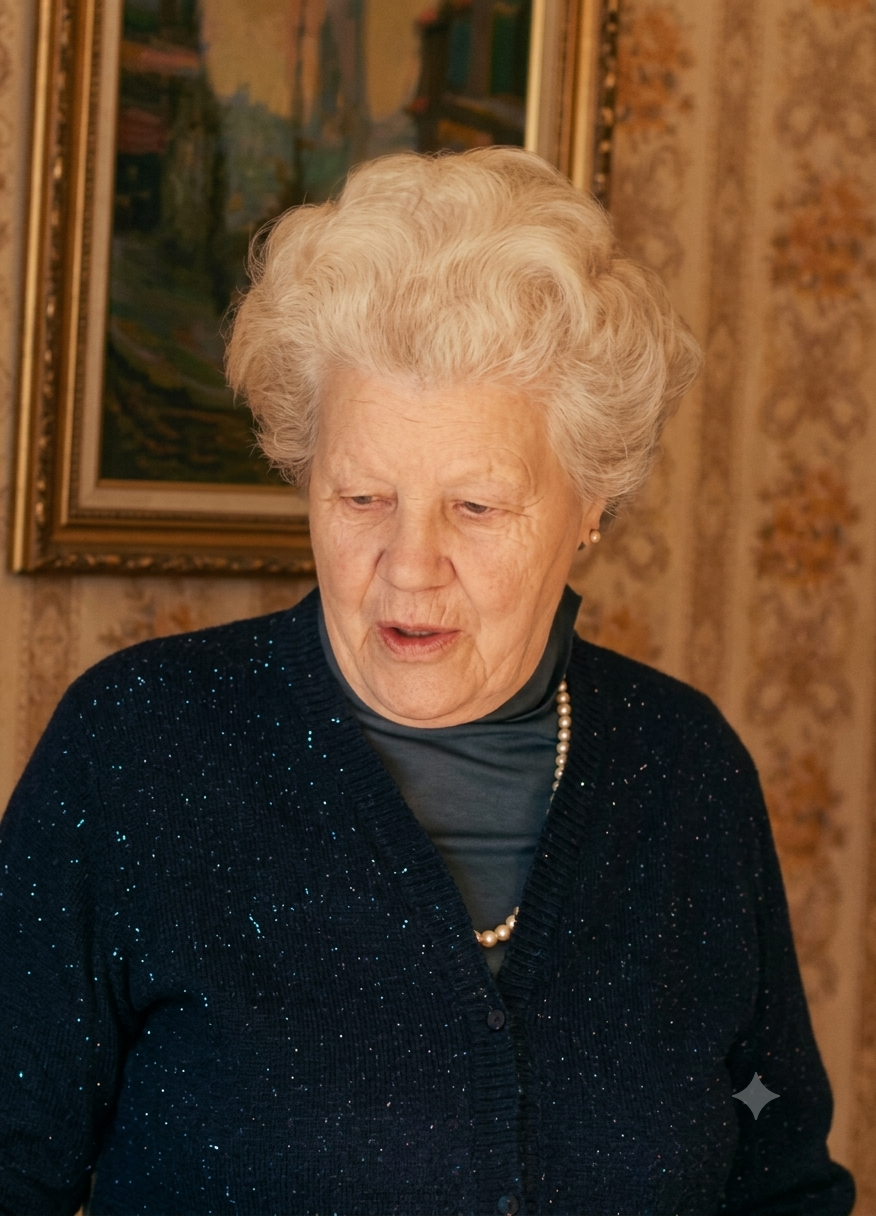
Gilda
Gilda: She was a matron. Skinny, I found her pretty stringent. I didn't have much dealings with her; much more with Nene, hes daughter. But that is another story.
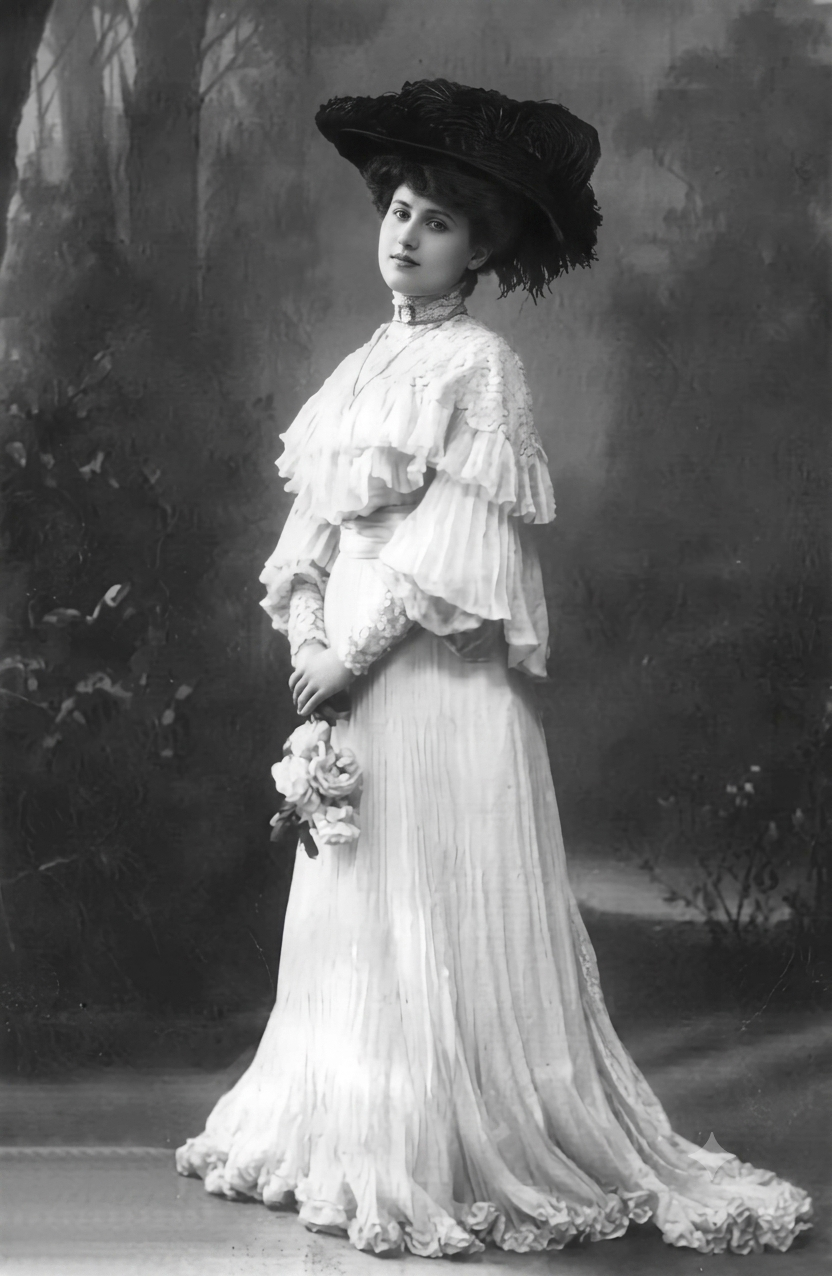
Quita
Quita: She lived in a house outside of Buenos Aires, I don't remember where.;, Quilmes? Huge garden with many trees. Old house 'with gallery. All very shady. There was a smell of wax. Quita was tiny, great with me. They let me sleep a few times at their house. She played the guitar and sang. Of her I remember the well-marked cheeks.
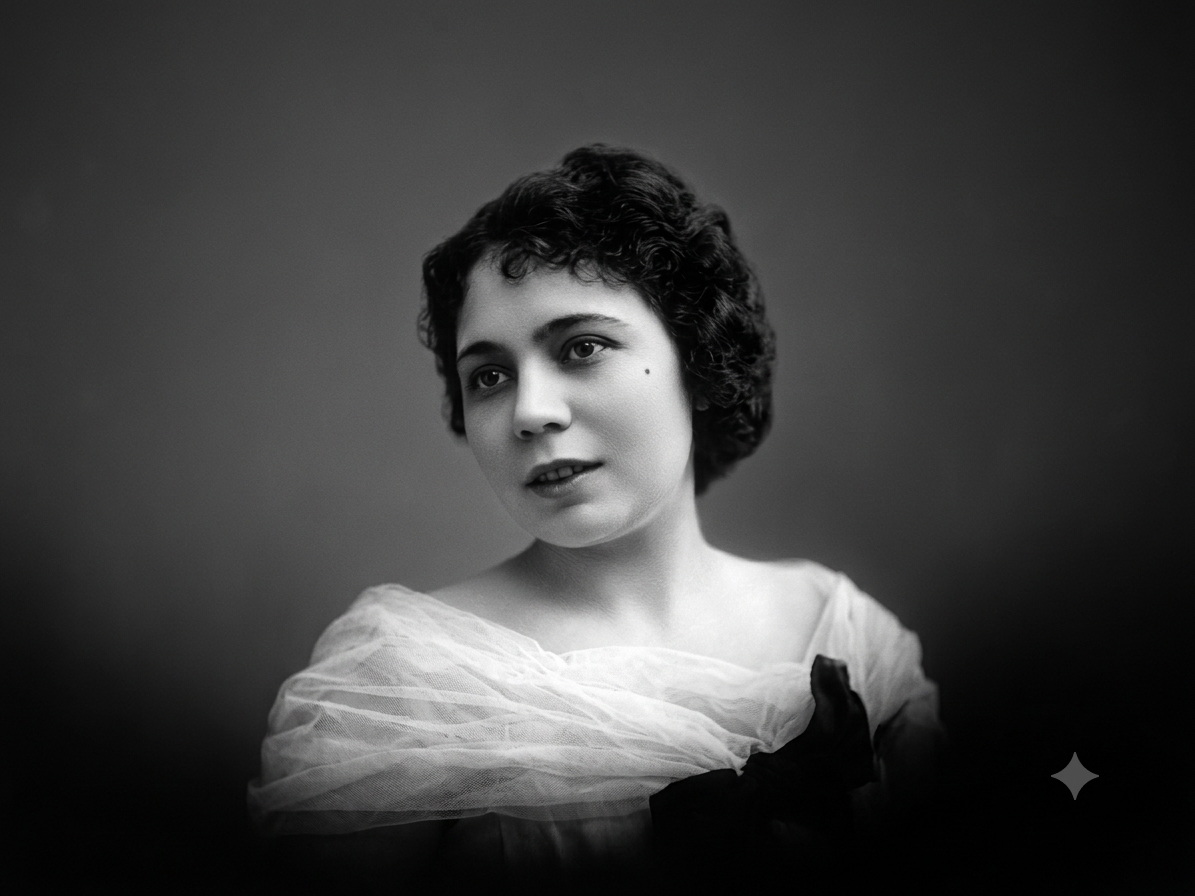
Hernan
Hernan
(From left to right front row, Mariquita, Horacio and Hernan)
I found him mysterious. He owned a strange place, something like a greenhouse. Was it at the back of Quita's house? One day I came in and got a big scare. There were a lot of dentures and I had never seen them before.
These are the Puglieses that I remember today. The idea I have of the Pugliese family is that they had an extraordinary sense of humor, that even in hardships they laughed and that I liked being with them. Unfortunately, I do not know why in this family, fights were the order of the day, and they were glued together one day and and separated the next. And we boys came and went.
Moments of Life
The longer autobiographical section has been divided into chapters. Select a title to open or close that part of the story.
Introduction
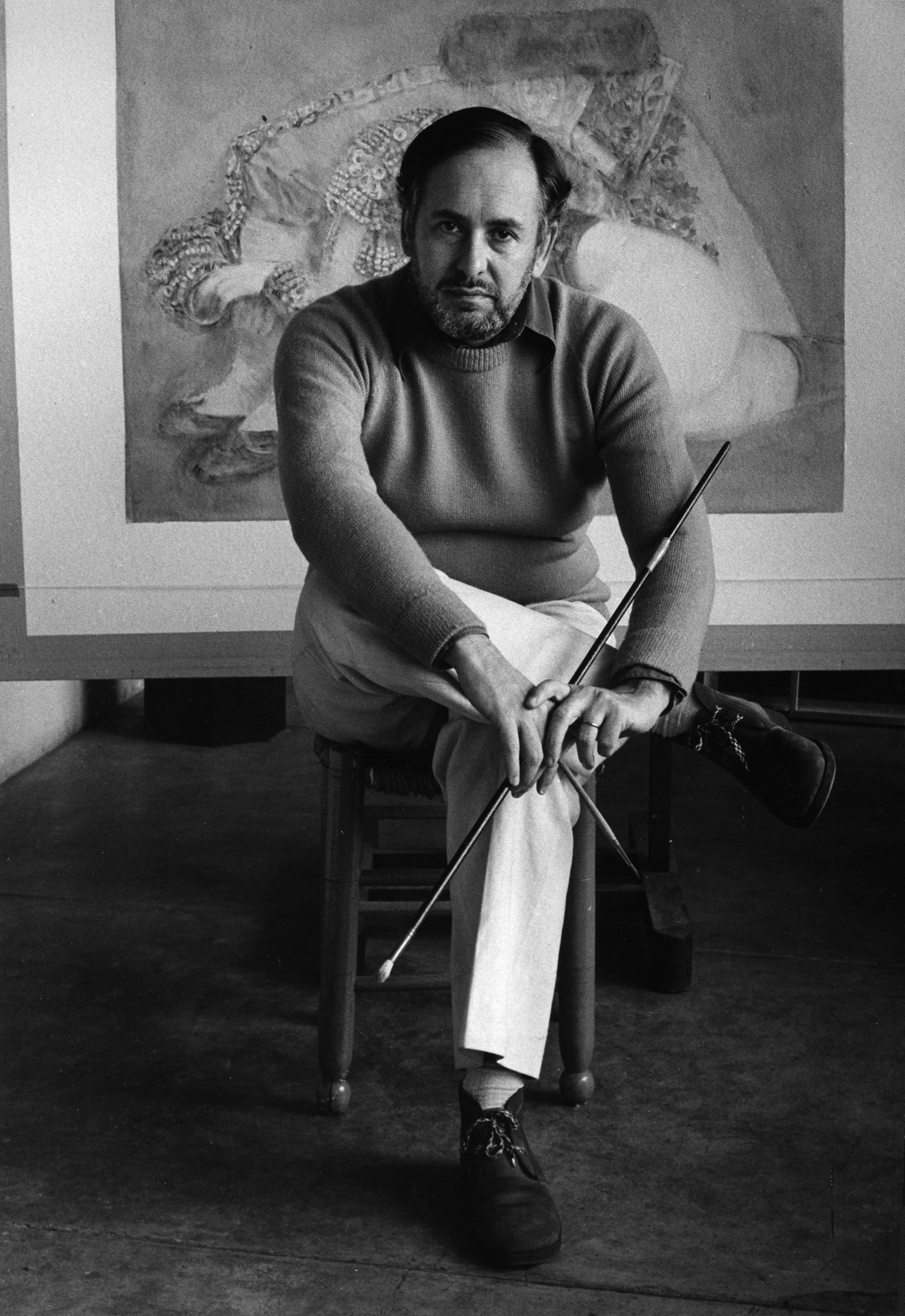
A few years ago , I had to give a talk because I was asked to summarize the story of my life. I wrote a text called "Moments of life", here it goes.
The first Roux that arrived from France to the Rio de la Plata, did so bound for Montevideo, with the position of Foreign Trade Counselor of the French Government. He founded the Chamber of Commerce of Uruguay, and left behind a solid fortune and large parcels of land. One of his sons (my grandfather) was the administrator of one of those ranches in Durazno, where my father and his brothers were born. He had a great friend, also a rancher, who asked him in a difficult moment to be his guarantor. So he did, with all his assets, never thinking that his friend would shoot himself a few days later. His sons did not recognize the debt of the father, and my grandfather had to take care of everything. This marked the ruin of the family which then moved to Buenos Aires, and having been raised in opulence, did not adapt to the new life. With a talent for drawing, my father nonetheless decided to become a boxer, enrolled in a club in Buenos Aires and began training as an amateur. To train and at the same time earn some money that he did not have, he became a longshoreman (changador), lowering and raising hides from ships in the port of Buenos Aires. The boxing career ended when he had to face the professional lightweight champion in a friendly match. Departing from what was agreed, my father touched his face and ended up on the canvas with a concussion. It was in his convalescence that he began to dedicate himself more to drawing. I think around that time he put together a small jazz band. I now remember the anecdote that on a Sunday when he was alone in the house, he transformed the grand piano into a harp. He dedicated his life to drawing comics. He studied some years at the Academy of Fine Arts, being a student of Alice and Collivadino. But his true passion was in historical research and drawing. He had a deep knowledge of the history of our countryside. Perhaps through these studies he rebuilt his happy childhood days in the fields of Uruguay. He was one of the first Argentine cartoonists who made comics with national historical themes.
From my mother I know that her passionate youth was touched by two adventures. The first to go to find Amundsen at the South Pole, which of course she did not see through. The second, at eighteen years of age, when my father kidnapped her from the nuns' college to be married by the judge, to the horror of the whole family, on both sides.
I was born nine months later and three years later my only sister, Mabel.
My mother dedicated her entire life to caring for her husband and children. Although this apparent calm was broken on October 17, Evita's passionate admirer rushed to place herself at her disposal to help her fill the labor market. I remember that October 17: my father took me to Avenida de Mayo so that I could "see the History", as he said, and we could barely hide behind the pillars of the Barolo Building so as not to fall wounded by the bullets of the shooting in front of the “Critica” newspaper. I still remember the bullets hitting on the walls, very close to us. It was night. The lights were out on the “Avenida de Mayo”. A uniform mass of people roared in the street. And suddenly, like an apparition, mounted on a white horse, and galloping from one side to the other, a man with a naked torso wrapped in the Argentine flag. That was for me a true baptism of fire.
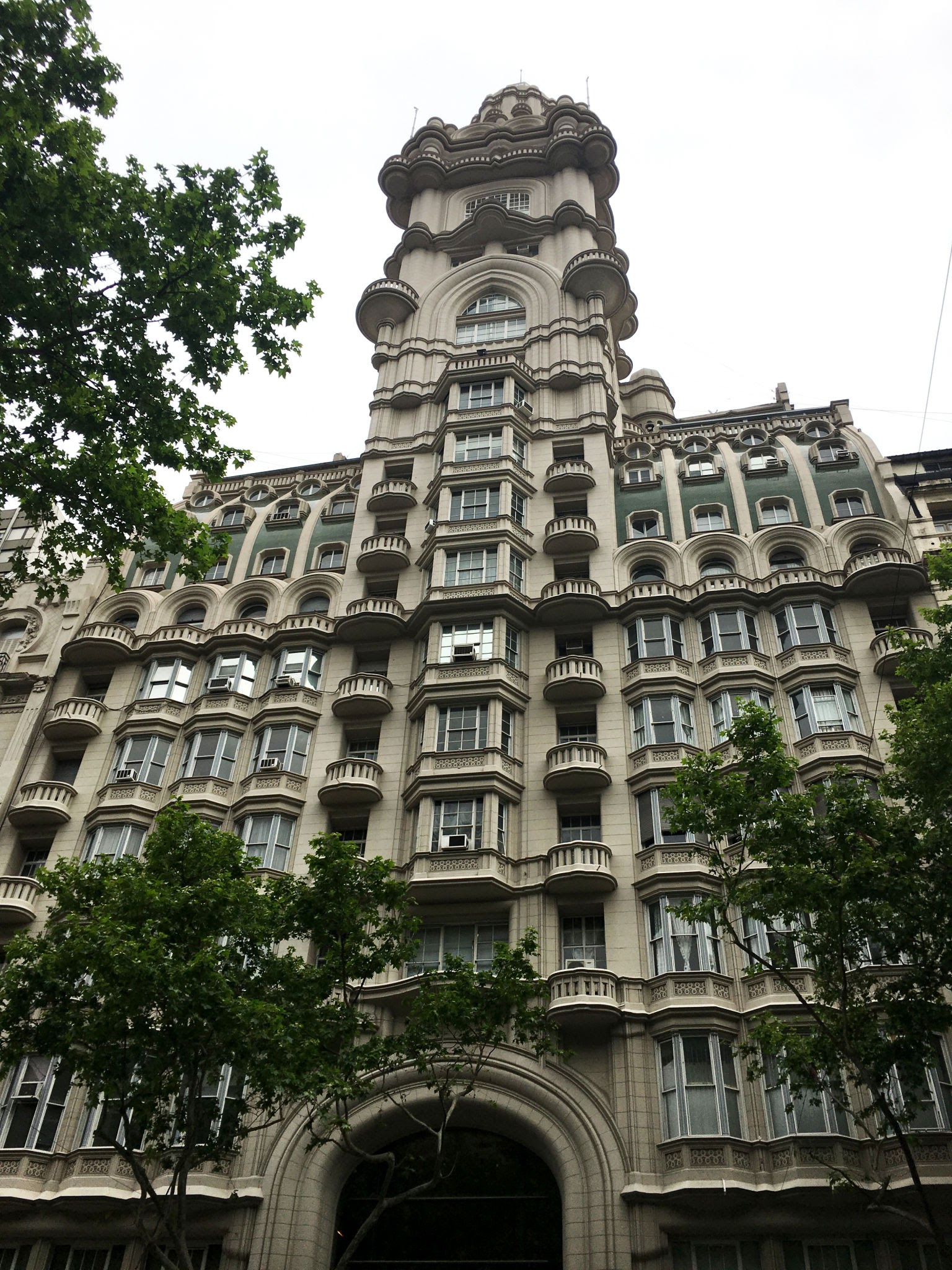
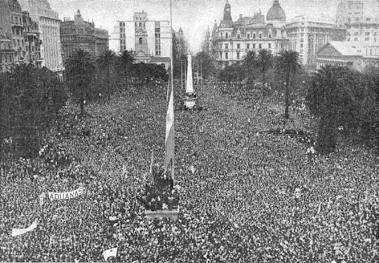
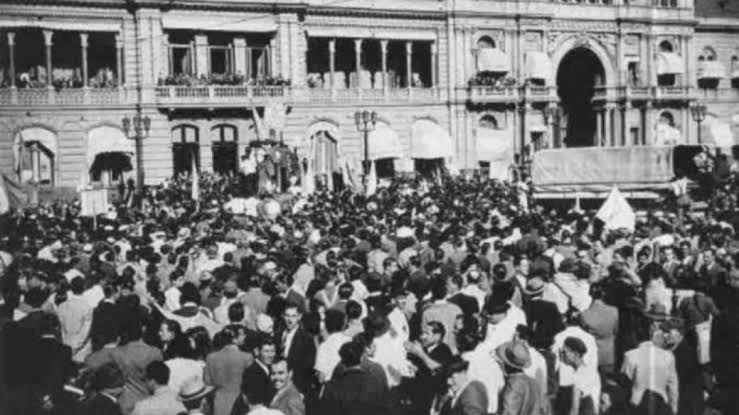
Buenos Aires, a city far from the south, so far from the rest of the world, that it was incomprehensible to me. In 1939 the European war, broadcast on the radio, seemed even more distant than any star wars of today. But even more distant, in time, was the neighborhood of Flores where I was born. The beginnings were the fabulous stories and the files of small clippings of my father. Paper, India ink, watercolor, and gouache. The locked cabinet containing nineteenth-century books with illustrations by Dore, which I could browse only in front of the grown-ups , transported me to medieval worlds that became reality in the dark streets of the neighborhood.
Tito and Jorge: Two Childhood Friends
When I entered elementary school, that is, at the age of seven, I shared my time with two friends who lived close to my house. One was called Jorge and the other Tito.
Jorge's house was a building that stimulated my imagination. No defined style. It was gray and white. It had a small tower topped by a straight dome of wavy shapes . An oval window and plaster moldings with ornaments depicting fruits and animals. I don't remember what the interior was like. I think there was an oval room. But I do remember the extreme neatness of Jorge's mother and the infinite care for that only son.
Tito lived around the corner, in an apartment house whose only entrance led to a long corridor
with tall gray walls like the floor tiles. Even if the sun was shining, that corridor was always dark. The entrance to the other units, which otherwise were the same, all converged on this hallway. Number 2 belonged to Tito's apartment. It was small, with a squalid and dark little patio, adorned by some flowerpots with geraniums, and the kitchen, the bathroom and the two bedrooms all faced this patio. A narrow staircase led to the terrace. Tito's mother was the image of pain itself. She was a gloomy woman.
We boys celebrated that Christmas like today, firing rockets. We went to Tito's house, and he thought that we should go up to the terrace to see the fireworks. The flying rocket that I lit, did not take off. It went up a meter from the ground to fall on the tiles and go straight to Jorge's feet, who stepped back without realizing that there was no railing on the terrace. In an instant the night swallowed him . Between the bars of the white bed at the Alvarez Hospital, I saw Jorge dead, his blond hair on the pillow and a very slight bluish tone on his forehead.
Jorge's house is still where it was. Today, when I sometimes pass by that block, I still see it closed, without anyone living in it, covered by the ivy of the small abandoned garden.
My parents didn't let me hang out with Tito for a long time.
I think we only saw each other again when we were twelve, but I went to his house very little, because what seemed sad before, was now devastating, in addition to causing me a certain fear. Actually, that house was grayer, darker and more humid than ever.
After the death of the father, when Tito was very young, the mother had a lover, who, jealous of him, a few weeks after our reunion, one night, while he was sleeping, stabbed him to death.
My parents accompanied me to the wake in the dining room of that dark house. I had to make an enormous effort to get closer to the coffin. I got dizzy. But for an instant the white so white of his skin, with the white lace that covered his body and the white flowers that were between his hands, formed a terrible harmony of color. Absorbed in it, for a moment I forgot that Tito was dead.
Sarmiento National School
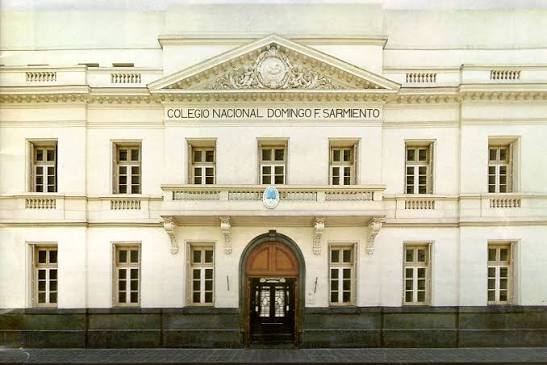
That gray, damp concrete patio, surrounded by inhospitable arches, and the horrible salami sandwich. Every recess for me was a martyrdom, because I had to go back to class. And since I was not studying, with that radar of the teachers who inevitably made me come to the front, I suffered the humiliation of not knowing. Until one day I decided to study, for the only time. And I gave the most brilliant geography lesson I can remember. Actually, the only thing I wanted was to stain the cards with black ink or with color. I could not bear anything that would take me out of that World: my destiny was decided. Weeks later, the bad studies were interrupted in the third year.
True to the slogan "study or work", I entered as an employee at Editorial Dante Quinterno, as an assistant to put Patoruzu's drawings in ink. And being among cartoonists I felt I was in heaven.
At the age of fifteen I also began to work as a freelance professional and sold my first illustrations and comic strips to some Buenos Aires magazines. Of course what I charged for these publications were insignificant prices. But the most important thing I picked up during that time was the invaluable experience of frequenting the newsrooms. In one of them I met Mario Quiros.
They had told him that a boy made good drawings, and there were some illustrations that he wanted. In that way we began to work together.
I often used to take my work to the “El Mundo” newspaper at night so that he could make the corrections, and thanks to that I was able to attend those meetings that ended at dawn, when the newspaper hit the street, and met Gonzalez Tunon and Nale Roxlo, whose brilliant thoughts were etched in my mind . They were men of an extraordinary universal culture. Of course, I attended in silence, in a corner, sunk in those aged leather armchairs listening in awe to the things that were said there.
1944
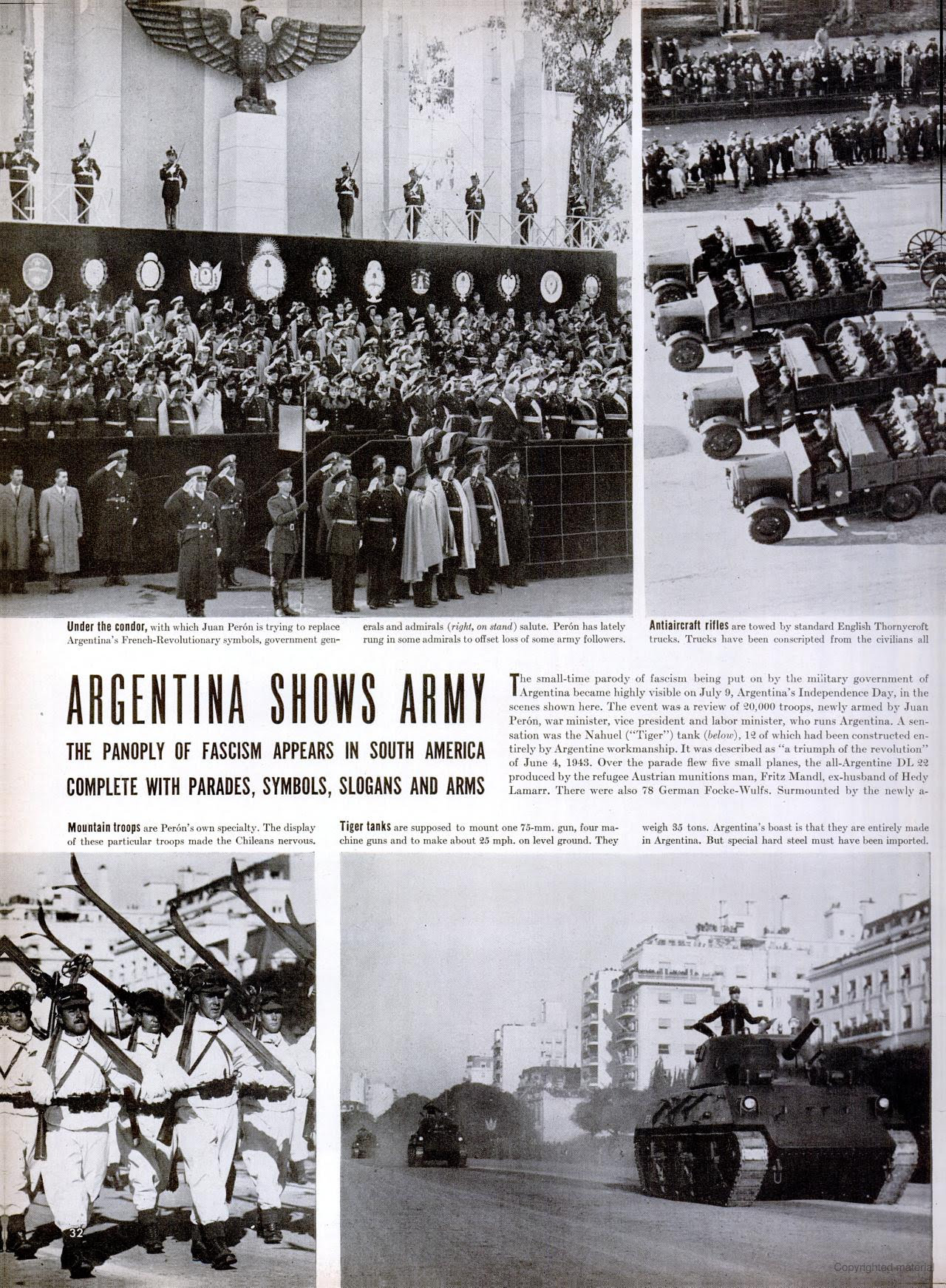
On July 9th there was a great party on Avenida de Mayo. Everything was flagged, and suddenly a furious storm broke out. I left my workbench and stepped out to the balcony. That spectacle of flags that moved and were almost torn by the wind, of people running, of torrential rain, unleashed in me the impulse to paint what I was seeing. I settled in the balcony and made a sketch of the scene. It must have put a lot of enthusiasm in it, because my colleagues were behind me when I finished painting, looking at me. I took that little painting to Mario Quiros at the EI Mundo newspaper, and that night it passed hands. Someone said "this boy is a painter". A few days later Mario decided to take me to his father's study. And one sunny Sunday morning , in Mariano Julia's Chevrolet, we went to Quiros's studio, in Vicente Lopez. Monastery Street. The garden had to have occupied half a block, and the house was hardly visible because it was covered with vines and wisteria. On the large portico of the entrance, it said, engraved on a stone, "AFTER GOD THE HOUSE OF Qumos". A butler saw us in and took us to the study.
I remember exactly that on this journey the dominant feeling was a mixture of fear, bewilderment and admiration. In any case, an emotion difficult to control. We entered the study through a small door, and I immediately cuaght the smell of turpentine. In the center of the room, there was the model and the painting that Quiros was painting at that time. A dead deer, which was hung by its legs from one of the ceiling beams, rested its head on a large white tablecloth that stretched to the floor. All kinds of fruits and vegetables, including a huge squash cut in half, completed the ensemble. Quiros had on his easel a large canvas that reproduced the scene, with the addition, in the background, of a landscape of Entre Rios.
Of course, in front of all that I was petrified.
The set was completed by heavy red apricot curtains, two gilt-leafed Solomon columns, a marvelous emerald green harpsichord, which I later found out he had brought from Naples, stylish furniture, richly upholstered armchairs, some Spanish sculptures of polychrome saints, and on the center table, the silver tea set that so often appeared in his paintings.
A few moments went by that seemed like an eternity.
Finally, the Master entered the study: he had black pants with gray stripes and a carmine red jacket, "So you want to be a painter" was the first thing I heard. "Let's see what it brings me." And I took the big picture of him off the easel, and put my little stain on. "It's not bad, he said, but you have to start at the base. I advise you to enter the Academy, and if possible, go to Trezzini's classes . And tell me what you are doing. Another thing. Where do you paint?" I told him that my parents' house was small, and that my study was my bedroom. "The bedrooms are not for painting. Find a study." When I returned to Flores, I had no will to speak to anyone. It seemed to me that as I moved away from the painter's studio, my life lost meaning.
At night, my fever had risen to 40 °. They called the doctor, and my mother accused Quiros of having made me sick. My father asked her for calm. For a week I was locked in my room.
But the following month, with the money from my drawings, I rented my first studio at Pasaje Barolo.
Shortly after, I entered the Academy on Cerrito Street. The first teacher I had, as Quiros had advised me, was Corinto Trezzini, an old Italian from Milan who had studied at the Brera Academy. His skin was very red and when we made a mistake, it was much more so. He had big blue eyes, as celestial as a Segantini sky. High, immense. All of him breathed nobility, he was a deeply good man, but what impressed me the most was the size of his hands.
We never saw half measures in the models that he put on us and we were always out of tune in the contrasts.
Don Corinth, who was about sixty when I met him, had a particular way of making himself understood. He would sit beside the student, which was worrisome enough, especially since his breathing was heavy and then he would turn red. He gently stroked our heads, with infinite sweetness, and asked: "Young man, what do you feel now?" "That you caress me, teacher." After which came a tremendous Nudge that pulled us from the seat, with the final comment: "Now you understood what contrast is". He had two handkerchiefs, black and white, one in each pocket. If he used black, it was a sign that something was wrong in the shadows, if he took out the white, there were too many halftones in the light. In those cases his comment was the following: "I hope, young man, you have understood the subtlety." Of course, if we didn't understand it, the “Nudge” method came.
How much passion and how much love did he put into teaching! To the point that there was nothing that irritated him more than when we asked him to go to the bathroom, because according to the artist, when working, one ought to learn to forget their physical needs. Today I am very pleased to remember Corinto Trezzini, whose name has been unfairly forgotten. He was one of the founders of the first Academy of Fine Arts. Almost all the great contemporary painters members of the School of Buenos Aires, such as Berni and Spilimbergo, received some of these early teachings and probably a few jolts.
I loved Don Corinto very much, and I followed him everywhere. One day I had the rare privilege of being invited to lunch. He took me to the old Baiardino restaurant and ordered directly, without consulting me, two plates of soup. When the waiter put them on the table, the teacher raised his arms and told me: "Before you take it, look at how the potatoes in the bottom of the plate are transparent ." That was the first lesson on the meaning of transparencies that I had in my life.
Gimelli
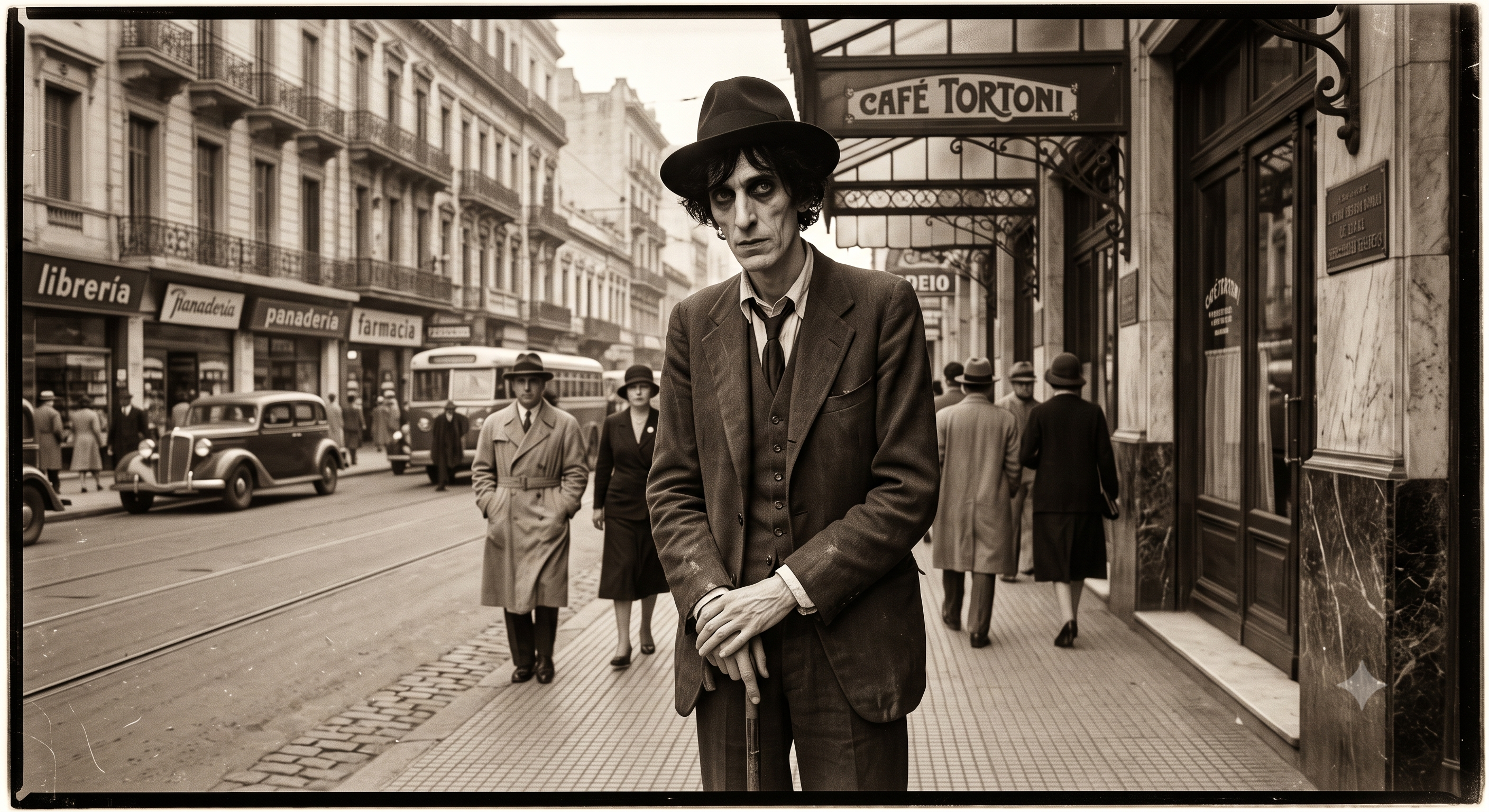
Gimelli was very tall and skinny, slightly stooped. His skin, of an extraordinary paleness. The black eyes, deep and wide, shone like burning coals at the bottom of the orbits. Aquiline nose. The forehead was hidden by thick, curly, black hair. Gimelli, whose name I don't remember, sat next to me on the steps of the Academy of Fine Arts on Cerrito Street. We were both eighteen. He always wore black, with high- necked pullovers . Big ears. The thin and very long hands. A strange Paganini. It was very rare to hear him speak, you could almost say that silence was his characteristic. Every now and then he would release a guffaw which because of the lack of habit of laughing, sounded like the squawk of a goose, and he would immediately envelop himself in silence and seriousness which so characterized him. He had a devotion for Leonardo da Vinci. He produced extraordinary drawings in chalk, which were, in general, heads taken from life to twice their size, he would draw a small horizontal in the center of the sheet and then, a vertical from which he began to build an unusual geometry composed of rhythms, measures and geometric shapes from which, little by little, began to emerge human forms. Those extraordinary drawings were almost always born from the representation of the pupil, around which this complexity of measurements and abstract forms was generated that ended up being a head. While drawing, which he did very slowly, he moved the lips as if talking to someone, but more than talking, it seemed a prayer. It was just my insistence that allowed me to make friends with Gimelli, if I could call myself that, because as I already said, he never spoke, much less communicated his feelings. However, we left the classes at eleven at night and we walked together down Cerrito to Avenida de Mayo where we visited a bar to talk about Leonardo Da Vinci. The name of the great master of the Renaissance was enough for Gimelli to light up and through that door, I could communicate with him to the extent of the permissible. I certainly think that Gimelli was a genius at drawing. During the course of that year, throughout which relationship lasted, I managed to get him to invite me to his house, which was also his study. I only remember that he lived somewhere near Plaza Once. The apartment was modest.
When I went the first time it was September 21, and I mention this date because while all our colleagues were planning a picnic in Palermo, Gimelli invited me to see his work. It was a bright sunny day. When I entered , for a few seconds I did not see anything, because everything was darkness in that place. He then lit a candle, and by the light of the candle he showed me the walls of his study-room-dormitory, covered with pictures that represented the head of a woman wrapped in a white cloth. There was no electric light because he hated it. "They are all portraits of my mother," he told me. "She's very patient, and she poses for me all the time." In silence he showed me sketches, drawings and more paintings, getting excited to the point of exalting the chiaroscuro and the fading caused by the light of the candle on the objects. I was startled when the door opened and Gimelli's mother entered the room with a tray and small cups of coffee. Remarkably similar to him. All in black and with the white scarf wrapped around her head. The mother did not say a word. Some time later, he confided in me for the only time in his life: his father had died when he was a child, having had a very bad relationship with his mother. It was so that on one occasion while arguing violently, the father said: "You, you shut up ", on account of which she swore never to speak again in her life, she kept her promise. I never heard from Gimelli again, or his drawings, or his paintings.
In art it was the time of abstractions and destructions, and of the attempt to condemn humanism to death. Picasso gave the last agonizing cry of the Renaissance, consumption began to swallow human beings, utopias were demolished, myths were erased.
The future lost its meaning to be just an instantaneous present.
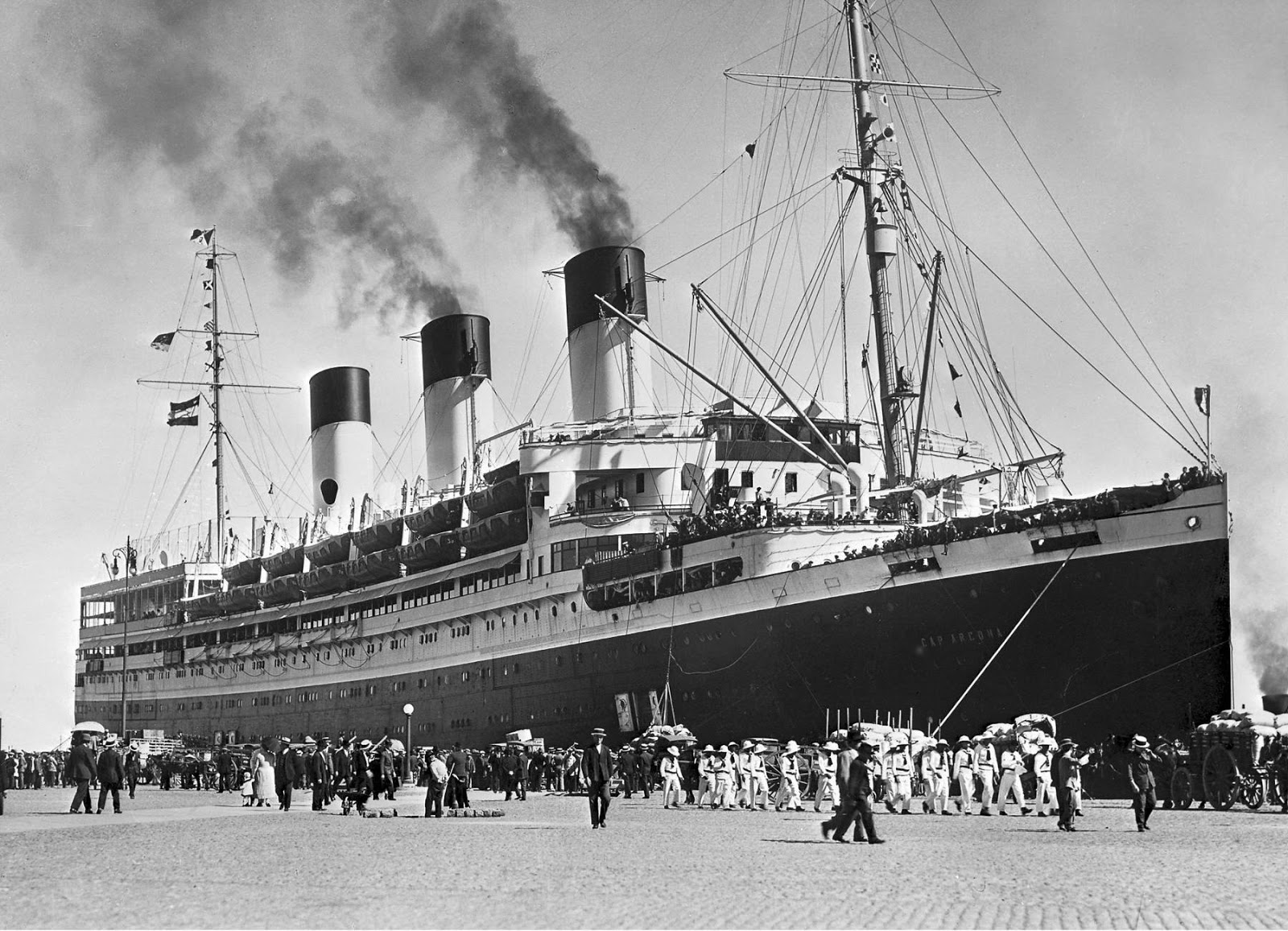
With the sale of my illustrations I had saved enough money to carry out my great project: the trip to Italy! One autumn night the steamer "Salta" sailed from the port of Buenos Aires and I saw my parents walk away until they were lost among the undistinguishable shadows of the docks . Some tears clouded my eyes, until finally Buenos Aires was confused with the stars and only the mysterious sound of the ship's engine remained mixed with the waves that hit the hull.
For the first time I felt alone. A stage of my life had ended.
The Nonni Master
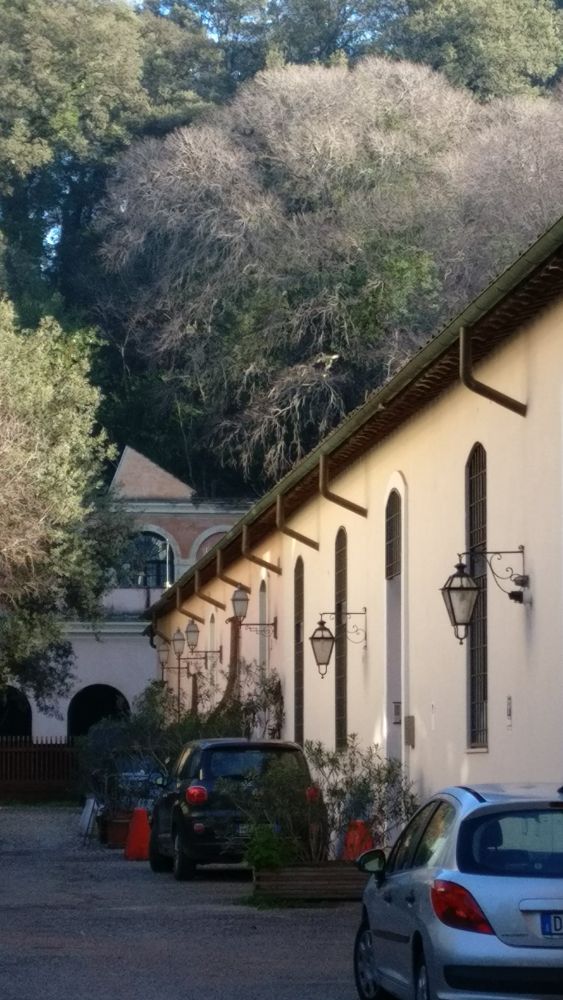
Rome, "1949. Via Flaminia 122, in the background, going up the stairs. A Roman terrace almost hidden by the Pincio trees.
Umberto Nonni's study was very modest. He didn't even have his own toilet. He was drinking one at the bottom of the terrace, sharing with the other artists who had their studios there. It was one of those incomparable Roman June mornings. A man in his sixties opened the door and I was kindly received. At the same time that I showed him my work, which he watched in silence, I was captivated by the extraordinary furniture that adorned his study. They were a strange mix of styles, with every kind of inlaid sculpture, columns, frontispieces, grotesques of animals and figures, leaves and fruits, and marvelous carved arabesques that reached up to the ceiling. Such valuable furniture contrasted with the extreme modesty of the place.
I started working at the shop, where there were other assistants, with a rigorous method of ten hours a day, including meals, and discipline that lasted five years. During those early months I never dared, nor did anyone else, enter any other compartments of the master’s home.
Nothing was ever kept in that furniture, and the teacher carefully waxed surface and then ran a cloth over them every two or three months.
He loved that furniture so much that we didn't even get close to them.
One day I built the courage to ask him where he had obtained such exceptional pieces, especially due to the mixture of styles, since in each one the history of Art was summarized. The master smiled maliciously and said, "Touch them, open the drawers." But the drawers did not open, nor did the cabinet doors. The furniture was an extraordinary construction made with sawdust, glue and cardboard with the exact imitation of the wood grain, painted by him.
Indeed, the master had built a fantastic scenography furniture with combined styles , and that assumed the most capricious forms. There were no drawers or sideboard doors to open, and there was not much to store either, because rolls and utensils were piled up everywhere and served, in the harsh Roman winters, in that unheated study, as fuel for the wood stove in the center of the workshop.
Finally, after years of difficulties, the master had been commissioned with an important job : the decoration of some chapels in Cork Cathedral. It consisted of the projects for the realization of mosaics for the apses; decorations for the choir with its seats and lecterns, capitals, altar, entrance bars, even the cross that crowns its dome.
When I got to the workshop I needed an assistant. I remember a large model hanging from a rope in the center of the studio. It was a scaled wooden construction of the interior of the church, with the floor missing.
We raised it to the height of the sample head and leaning out we could study the deformations, proportions and color from the inside.
The study of the human figures and the geometric guards of the dome was done in the old way , that is, cutting the figures out of cardboard, darkening the workshop and projecting the shadow produced by the light of a lantern on the curved surface.
When the friars from Ireland who had commissioned the work came, the professor, who did not know English, needed a translator. He sent me to the home of a strange character that he had met.
Alois lived near Porta Pia. I remember negotiating a tortuous route of stairs that went up and down, to arrive at something that I don't know if you could call a room, since it was buried by ivy and plants of all kinds. It was autumn and it was raining. Early evening in Rome. The house was dark. Alois was very thin. Ropes and strange objects hung from the walls of the room that I cannot remember today. Alois was a Hungarian Jew who had survived the concentration camps. The teacher told me that the ropes had been brought with him when he was able to escape from captivity.
The Irish friars came to the studio to see the sketches of the decoration of the chapel.
After the interview, they invited all the members of the workshop to a great dinner in one of the most luxurious restaurant in Rome. We all ate a lot, but Alois really eat without Iimit. The teacher was impatient and restless.
The next day he told me: "I don't like these friars. What kind of Franciscans are they inviting to that restaurant. You can't believe they have taken a vow of poverty. Every now and then, for months, I repeat the phrase" don't like these friars ", and this was the cause for the job beginning to fall behind.
But there was another circumstance that aggravated the completion of that blessed chapel. And it was the following: as always, every six months the friars came.
The day they had to arrive, I had to climb on the roof and spy. Indeed, I saw them appear at the end of the driveway, and with a stick I struck the three agreed blows on the roof. Signal for the teacher to prepare to receive them. Surely the friars had eaten and drank a lot as usual. They were happy and excited. In truth, Italy, and especially Rome, made them euphoric. They were like boys who had left school. I have not been to Ireland, but I can imagine that gray and cold climate, contrasting with the warm Mediterranean. The case is that they made the involuntary mistake of entering the study without shaking hands with the teacher, simply the "hello", which Saxons are used to. The teacher was very ceremonious and was so offended that the fact that they had not shaken hands was the other cause that delayed the completion of the Chapel of San Antonio for almost a year. Now I was saying: "I know my bird is the hand, now it is finite." And he finished: "I don't like those friars at all."
Bargellini's Photos
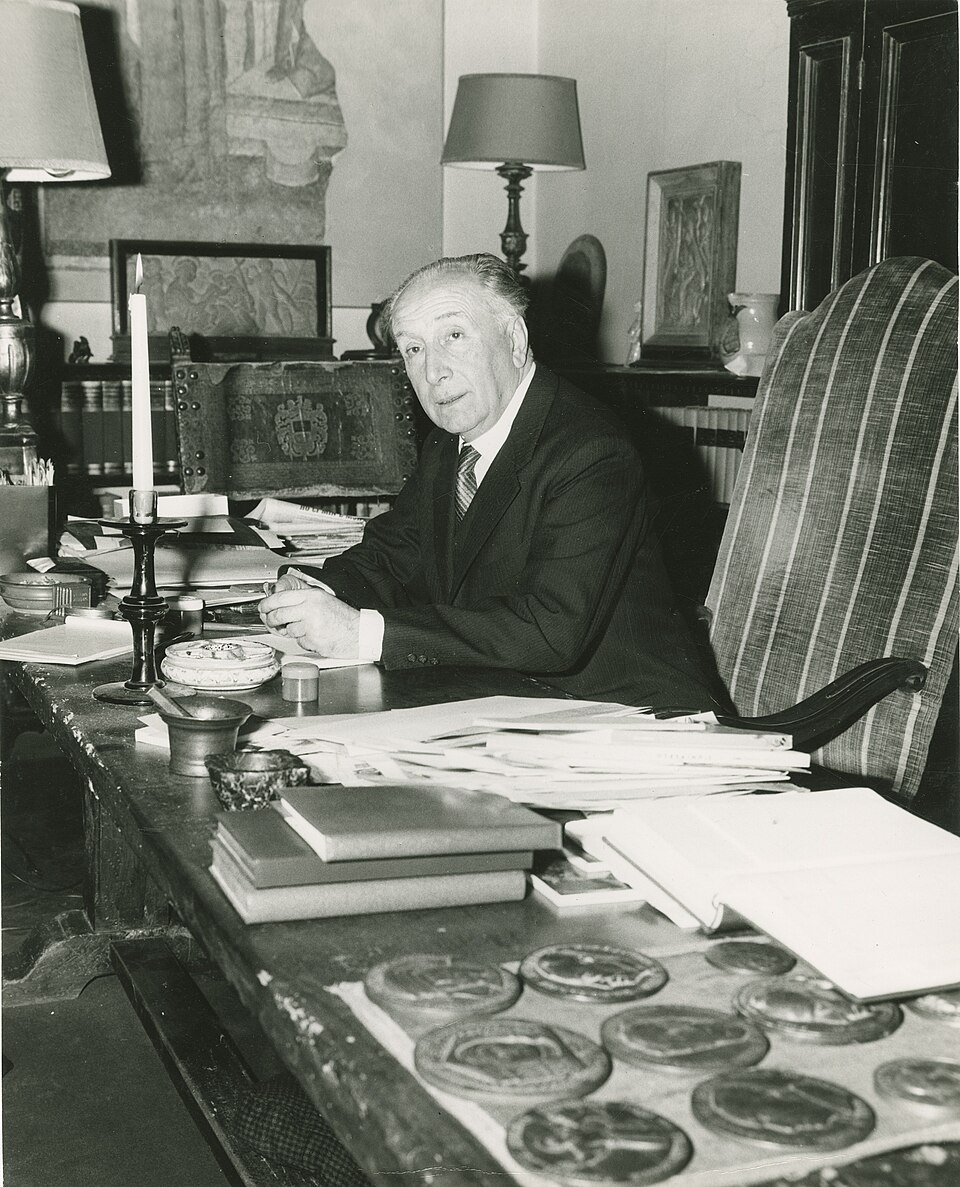
One morning the professor arrived with large packages and was very nervous. He had brought a large quantity of glass plates of those that were used as negatives in the old photographs. With great disappointment, he told me that he had discovered the truth.
The teacher had been a student of Bargellini, a painter from the early 900's of extraordinary decorative and naturalistic ability. The long Gallery that is above the Monument to Victor Emmanuel II in Rome, and that almost nobody visits, is decorated with mosaics made on Bargellini cardboard . In the Museum of Modern Art in Rome there is a "Giordano Bruno before the Judges", for painting with extraordinary skill. He was successively a painter of Bistoria pictures, to later follow the style of Klimt, whom he had met in Vienna.
The teacher worshiped him as a god, he had even helped in large wall paintings that Bargellini executed in different palaces in Italy. The negatives in question were photographs of the models that had served him for his paintings; On some of the plates, for example, were the models of "Giordano Bruno before the Judges," and the teacher's tremendous disappointment was to have discovered that Bargellini took his picture frames, which he considered a lack of professional honesty, an attitude certainly inconceivable in our days. So he began to show me those negatives, a document that seemed wonderful to me.
As I suspect that in the flea market in Rome there might be more plates, I dedicate the afternoons to that investigation. Finally, he made a pile with all of them on the terrace in front of the study, and with a stick he smashed them, to my silent consternation.
Mariu
Mariu came to do the cleaning. She was a happy chubby Neapolitan. It was enough that he fell in love with a conscript who had also come from the South. Piero made her suffer. And she cried as I have never seen a person cry. Tears were falling so fast they wet the floor. And he had no consolation. All this while sweeping.
One day he did not appear. Neither did she the next one. The teacher sent me where she lived to see what was going on. Near Piazza del Popolo, at that time, there was a village of emergency houses. There I came across Mariu's shack, where on the front door there was a sign that read: "Mariu" and below, "Fortuna assistimi, Invidia crepa" (Fortune assist me, Envy dies). No one answered it when I knocked on the door. The neighbours told me that out of desperation that Piero had left with another, she had thrown herself into a well and was with both broken legs in the hospital. From there I went to the hospital, and found Mariu with both legs in a cast, crying as always. She did not return to work. Then I learned that she had returned to Naples.
Five years had passed since my departure from the port of Buenos Aires. Five years of workshop mystique , because that's what it was. At that time I was inclined to the Florentine masters of the 400, and studied with particular attention minor painters of that school. The mechanisms of Art are always more rare in the henchmen of the great masters than in themselves. Because great painters, great creators, hide their secrets like magicians. They convince us that the artifice is simple, natural and easy. The school painters, on the other hand, make everything visible because their works are created with effort. I can say that the Fresco technique came to have no challenges for me; technique that I then applied to give my watercolors solidity.
There was an exhibition by Poussin, and influenced by him I devoted myself to drawing the Roman landscape, seeking to give it that monumental simplicity so characteristic of this French painter.
Life in Rome was wonderful for me. I remember now that I saw it golden one sunset, from the top of the Villa Aldobrandini in Frascati. But the Italian time was over, and he had to return to Argentina.
When the train moved, I hugged my teacher. From the window I watched him walk away with his gray suit and big blue eyes. I would never be with him again.
The Return
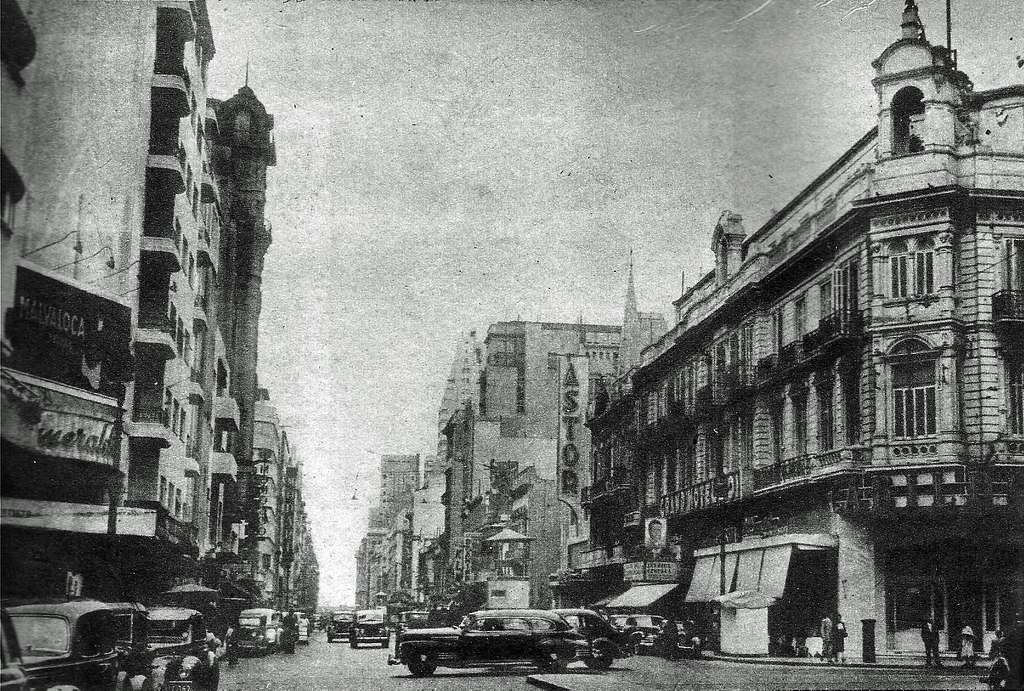
When I got to Buenos Aires, it was not the city I had left. I didn't recognize her anymore. It seemed flat and sad. I no longer spoke with my old friends. No gallery was interested in the drawings and paintings that I brought. And also, no money. I had to return to the illustrations, and find employment in some advertising agency. Life seemed uninteresting to me. This city can be terrible when one is sad. My eyes were looking for ways to shape the space, lights, shadows, and I only found endless flat facades without style. And in the neighborhoods, the houses with those masonry ornaments, a very small reduction of the great ornament classics, At night, after dinner, the usual, endless and useless political discussions. How far has Paolo Uccello been!
Nothing tied me to Buenos Aires, and in that state of mind arose the mysterious impulse to seek nature. A short time later I arrived in Jujuy with my first wife.
Christer
When the war ended, Mrs. Schimterlow and her two children came to Argentina. They were an Aristocratic, Swedish family. The children of Mrs. Margarita Schimterlow were very young at that time. She directed the construction of her house in one of the poorest neighborhoods around Jujuy. In the middle of the rancherio de los coyas, and hidden by a eucalyptus forest, was that square house with an interior patio, stables, an apartment for servants and studios for artists. The house was a replica of the one they had around Stockholm. The moment I arrived in Jujuy, Christer, which is the name of the youngest of the children, discovered me painting a landscape and he invited me to have tea, with the day and time, to introduce myself to his mother. Entering that house caused a confusion difficult to describe. They had brought sculptures, paintings, furniture, dishes, curtains, in short, small remains of a palace. Our conversation revolved around the Swedish painter Frederick Hill, a 19th century Nordic landscape painter very close to Corot. On my return to Argentina, I had seen a small retrospective of this painter in Paris , and I was able to tell the lady about the impression he had made on me and even give her technical details. The next day Christer came to the poor boarding house where I lived, to tell me that the mother offered me one of the studios with a place for me to live and work. Christer, who was also and is a painter, - at that time he was like me, about 35 years old - occupied another of the studies.
In 1966 she traveled to the United States and, a few months later, she decided to return to Sweden. From that moment we knew nothing more about each other. One day in 1986 a note from Christer arrived at my house in Martinez , telling me that if I received it, please reply to the address he indicated, in Stockholm. It was something like the claim of a shipwrecked man thrown in a bottle into the sea. I had written it to a librero in Buenos Aires, whom I did not know, and after several months he located me and made me get the note.
I delayed answering him, however my letter arrived just in time to give him the necessary vital breath . I found out that Christer had cancer and you can imagine my surprise and bewilderment when I found out from his wife that when he found his friend Guillermo, his spiritual state had radically changed, and that the disease had suffered a remarkable reversal, verified by the doctors. . At this time, Christer's letters continue to arrive promptly every 15 days. Christer was reunited with Argentina, a country which never forgot, and that it is helping to live.
On May 19, 1964, a pair of big, surprised, black eyes looked at me for the first time. My daughter Alejandra was born.
In Jujuy I was a school teacher, fulfilling my duties in the morning. In the afternoon, until the evening, I devoted myself entirely to painting. Those years were short. I put into practice in front of nature what I had learned in Europe.
Villa Cuyaya was rugged and expressive. The orange dirt roads ran through it in all the senses. On the sides, deep brown caves covered by green-black undergrowth. Houses of concrete, white, pink and blue like the sky. From time to time, a coya crossed the landscape silent and dark as a shadow. In the background, the Precordillera, like an immense wall, blocked the clouds that came from the south. In summer, the rains on the village were torrential. Every day after twelve, with my backpack on my back and the easel on my hand, -which at the same time served as a weapon to defend myself from the packs of maroon dogs- He entered that world in strong ways accompanied by the spirit of Cezanne.
My homework in elementary school was very personal. He spent time talking and drawing with the boys, which was difficult due to the closed character of the coyas. They looked at me with impassive eyes, without my understanding if they approved or not what I was saying. It was actually very difficult to know what they were thinking. Behind his apparent submission, an impenetrable pride lurked. Set up a puppet theater for them, in which they did the puppets and the sets. To give them a dynamic that might interest them, adapt stories by Perrault and Grimm to their understanding. At the same time, in my studio, paintings and drawings were piling up and there was almost no where to walk. The last paintings I made were red like iron oxide that had the desolate landscape in the Zapla mines.
Through a personal and solitary journey, I arrived at a reduction of landscape geometries very close to cubism; and then you need to see and experience today's city, today's world. Win a contest to decorate a public building, and with the prize get a ticket for New York.
New York
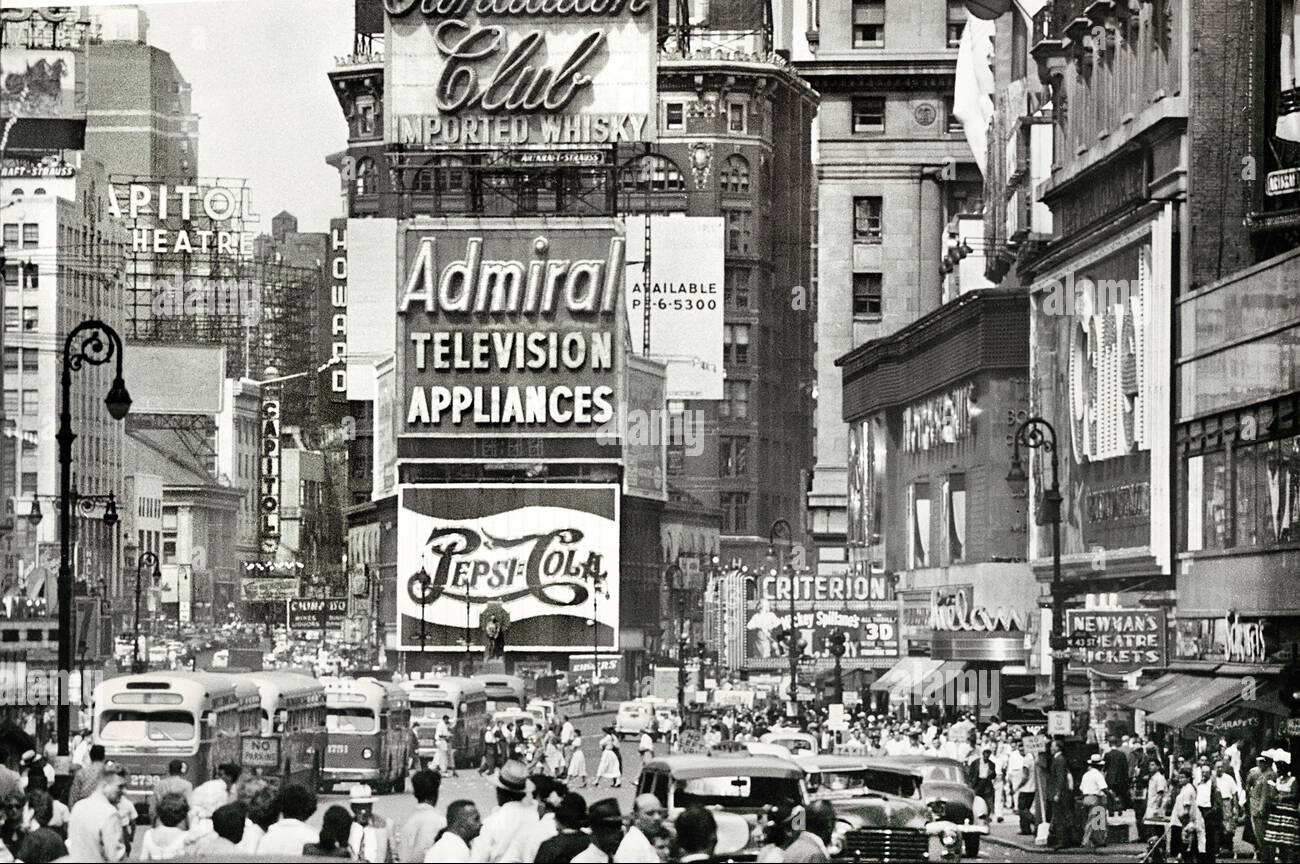
The clash with the big city was difficult. Two friends welcomed me into their house and it took me a few weeks to go out. I took advantage of them by putting together a portfolio of sample illustrations to go and offer them to publishers. I read in the newspaper that an agent needed cartoonists and there I went. The subway in which I was traveling with my work jolted and the drawings I was carrying fell to the ground. A man helped me pick them up. "(Who did this?" He asked. "Please come see me," and gave me a card. I still wonder why the art director of Random House was on that subway. Thanks to him, to the 15 days after arriving in New York for illustrations for books published in that house. I also had four different agents, and each one identified me with a pseudonym. The drawings that gave me the most money were those of pots and pans for the publicity of a "department store" in Queens, which was published in the New York Times. I think they paid something like 50 dollars for the pan and I made them fast and in lots. I could save then, with this and with the covers of "pocket books" a few dollars At four in the afternoon I would plant everything and dedicate myself to painting until 2 or 3 in the morning.
There I met the greatest illustrators of the moment. I especially remember Milton Glaser. I went to visit him with my illustrations. He looked at them carefully and said: "Don't waste time with this, you are a painter." Years later, relatively recently, I invited him to one of my exhibitions in New York and there he said to me: "I congratulate myself that I was right at that time."
At that time I voluntarily renounced color and concentrated on the human figure. Mashing the coal on a plate marmot, the mixed resin and painted with this material. Paint a series of life-size nudes, strongly expressionist in the violent contrasts of black and white. The painter Richard Diebernkorn had put aside the beautiful abstract paintings that he made with the theme of the San Francisco parks and that made him famous, and exhibited a series of nudes, also in charcoal, at the Point Dexter gallery. Strange coincidence:
Diebernkorn was already a recognized artist in the United States and at that time of abstract art in the world, he had dared to exhibit that series of figures that shook the artistic world of New York. The New York Times published a note that read: "Divercorn Stops Before abyss ". I sent him a letter with the photographs of my work to California, where he lived, theorizing about something that I sensed as a change in the way of plastic, Something was running out. His response was wonderful. That letter was lost , unfortunately, because much of what is happening, it foreshadowed in it.
The painter Alvara lived in a room that was a bedroom, kitchen and study. For a short time, I also worked for him. EI got the job, I was painting, he signed and gave me 50%. At night he took out his furniture from a box. They were all made of rubber and self-inflating. Bed, chairs, all inflatable. The next morning I deflated them, and back to the box.
In a bar on the 5th. Avenida, where I went to seek refuge one snowy night, I met someone who called himself Carlitos "el Celeste." He was Argentine and dressed like Carlos Gardel with a hat and a white scarf around his neck. He saw me, he approached when he realized that I was also Argentine, and without even saying hello, he began to sing "Volver".
When I went up to the gallery of the house, that night that Carlitos invited me, I felt the smell of barbecue that came from inside. His partner, a red-haired Irish woman with whom he shared his sad and melancholic life , opened the rickety front door. Carlitos "el Celeste" ran to greet me with a fork in his hand. In the central living room there was an ombu that reached up to the ceiling. The grill at the foot of the trunk with burning coals. "Don't be scared, coals are non-combustible like the kindling of those gas stoves", Carlitos told me,. •• "And the navel is made of plastic. I had it made to one of those houses that make plants for gardens. I gave them a figure from a botanical book and they took it out just the same. " That summer night in New Jersey there was guitar playing, barbecue and empanadas at the foot of the ombu.
I was approaching 40 years old. I had to return to Argentina to enforce a Random House contract and return as a resident to the United States. Those 12 hours of the NY-Buenos Aires flight were fraught with anguish. I had absorbed different cultures, lived many experiences. My trade allowed me to live in different parts of the world, but nevertheless, I was not yet who I wanted to be.
Until he was 22 years old, when he traveled to Europe, the discussion in the visual arts revolved around abstraction and figuration. Picasso was not yet fully understood. For the avant-garde, only abstractions counted. There was a vanguard, because there was still something to oppose, unlike today, in which everything is absorbed by the system. The movements that sought to renew painting forever, had an unlimited faith in man and exalted the world of abstract geometric forms as the only one possible in a future of progress, well-being and happiness.
I attended the meetings of my companions with the teachers who captained the different groups. There were young people of bright Inretect. They read Nietzsche and Sartre and theorized about Picasso's art . In general they considered that the world of representation in painting was dead. I did not feel those euphoria for the future that they had. Nor did he hate the past. There was something in me that I could not define, but that I was looking for an answer, and I did not know what it was, but that certainly was not in what was being done at that time, nor in what was being said. They wanted to convince me at all costs • How ugly are dictatorships in any field! For me, reparing a wooden board well so that it receives the paint on top, mixing varnishes and wax to achieve a certain texture, modeling a head well, understanding the meaning of the half tone and its expressive possibilities, practicing the difficulties of foreshortening, learning to associate human forms with the forms of objects, these things were enough for me. In a word, I just wanted to learn the trade and that made me withdrawn. In Roman aiios could, against the originals of all time, acquiring the job I was looking for , without neglecting the expression of it which I believe have left evidence in the work of that time.
When I returned from America, the abstract ideal was in crisis. Picasso's phantasy seemed to have exhausted all possibility of representation, and consequently painting.
Looking for himself, he had suffered an extraordinary "streap-tease". Informalism rescued, enlarging it, the brushstroke, the very small portion of the painting.
None of this was my thing , in such a way that I thought that my destiny was like that of those souls that wander senseless through Purgatory, without finding their locker.
Franca
At 39 I was in a dark forest.
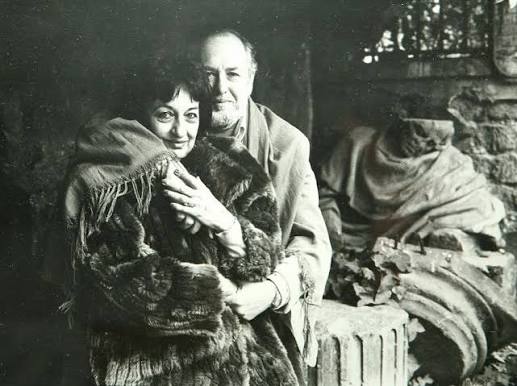
It is difficult to refer to Franca in terms that are not purely sentimental and affective. The importance it had in my later development makes me try as objective an approach as possible. I beg you guys to excuse me for doing it. She put order in my life and in my thoughts, helped me to discriminate them and led me to the other key experience of that moment, which was psychoanalysis.
Franca is Italian and belongs to a Sephardic Jewish family whose origins date back to Old Testament times . In it are summarized and synthesized human qualities that have the force of the original, that is, an accurate and clear judgment, an immediate perception of the problems and an almost always surprising and concise solution. All this coupled with an unusual sensibility for painting. And this doesn't just come from her education, which was painstaking. Her family, Roman, belongs to the high bourgeoisie. Raised in refinement and in contact with art and culture, she had to leave that world, marked by a confident optimism of existence, by the racial persecutions of fascism. Inserted in Argentina with her family, her instinct to detect talent wherever she was, brought her closer to very important characters of her time. Indeed, I had talent. An inordinate talent , but evident in the works he had done. I am sure that Franca sensed my future development from the first moment.
My first contact with psychoanalysis was a revelation, a daze. I found the space where I could fantasize, play, lose my mind and find it again. I went to each session with the enthusiasm and curiosity of one who expects surprising revelations. The sessions seemed short to me , and I came out of them like a dream with the displeasure of having to return to the unbearably everyday world . Like a box of a thousand surprises, each image was the door to wonderful worlds, but also cruel and painful. I felt that another Guillermo was being born, a hidden one, and until that moment unknown to me.
One day I arrived as usual for my session, which I never missed, and upon entering I had the vision of seagulls facing the sea. And myself-on the couch I felt floating on serene waves. The entire session was around the seagulls circling the room. As always the 50 minutes were short. The psychoanalyst showed me a book that she had open on her desk and that she was reading before I arrived. It was Chekhov's theater, and the play he was reading, "The Seagull."
I was discovering the solar side of life and things spoke to me differently.
Recover childhood, and before childhood, the childhood of my parents, another world. I was able to peek through the curtains of the lattices on a summer afternoon -when the voile of the curtain moves gently with the air that enters from the street in those cool, shady, clean rooms, with the scent of lavender-, and looking through the curtains begin to build the painting of that moment. Secret and confessional. It is what that middle class world described, from the Buenos Aires neighborhood, melancholic and hopeless. Neat, tidy, with skates to avoid dirtying the wooden floors, with patios with watered plants in the summer afternoons. From green striped awnings, whose glare of amber light dyes everything. A little silver flower vase, with the portrait. The Art Deco armchairs in which boyfriends prolonged the desire to the limits of the impossible. When my watercolors described that world, I felt I was in the truth, mine.
My painting of that moment coincided with the exhaustion of informalism and abstract forms . Surely he was talking about something new that wanted to be heard, and the doors of the main Galleries in Europe were opened to me.
When one speaks of the great galleries, one refers to establishments that have played an important role in the cultures of different countries. And it was not a minor problem, the negotiations with dealers, museum directors and critics. Franca was then the link between those institutions and me. At the same time as she translated me from the respective languages, she imperceptibly gave me the European sense of Culture. Because while Franca assimilated to Argentina, which she considers her homeland, she has not ceased to be European in her deepest essence. Franca was then a valid translator, able to synthesize, putting clear different pianos of the talks that it generally ranged from the conceptual to the business. And you already know how subtle these conversations can be, especially in Paris, where a misinterpreted stress completely changes the meaning of things!
Talked before about Franca's special sensitivity to painting, which she is otherwise capable of making remarkable line drawings. She knows how to see immediately, and also substantiate it, what does not work within a work. And at the time of doubt and of uncertainty, say the timely right word.
Mister Lloyd
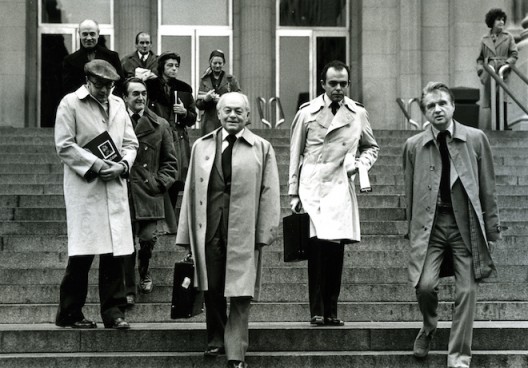
Rene Whitofs, the leading gallery owner in Brussels, arrived in Buenos Aires for the first time looking for paintings that had been stolen from him. He saw one of my drawings and was interested in my work. After completing his paperwork, he returned to Europe, and shortly after he handed me an invitation to exhibit at the Marlborough Gallery in London.
I put this exhibition together quickly, I had not yet had the time to spend a long time on my watercolors, and I could do each one in a few days.
It can be said that I jumped from almost anonymity in Buenos Aires to the first Gallery in the world, and the crash was not easy. For the first time we were faced with the fierce laws of the market. The exhibition was held and was relatively successful. But I was lost like a drop in the sea, in a Gallery that had Bacon, Picasso and Braque as stars.
At that time my watercolors were worth $ 700. Naively I thought that exposure was enough to clear all roads. The future showed me the opposite. But that is another story.
The day the show ended, Mr. Lloyd, the director of Marlborough, walked me into his office and said: "Your paintings today are worth very little, and they are not business for my company. When they are worth ten or twenty times more, they will begin to be interesting. Now you continue your way in Europe and like Bera do it alone. I as God will watch from above, and when the time comes I will call.
And indeed, the subsequent tour we did alone. I worked with Galeria Jeanne Bucher in Paris for a few years. The star of the Gallery was Vieyra da Silva, and when she called on the phone, everyone ran. He was a silent character, something as well as a spiritist, pale, always dressed in violet or black. One of the last 61 times he exhibited in that Gallery, he could hardly stand. She sat in a chair against the wall, hard, mobile, all in black and pale. The people paraded in an orderly manner to greet her, and she extended her hand like the Superior of a convent.
Vieyra did not like my work, she was disembodied and my watercolors were full of sensuality. The contrast was too great!
Henri Michaux, on the other hand, paused for a long time to look at them when I exhibited them in '77, with a smile of satisfaction and mischief. He was kind to me. Then the gallery owner told me that he was very interested in my painting and planned to write about it.
One day there was a great commotion in the Gallery. Everyone ran from one side to the other, an employee, overheated, came to look for me at the offices "I'm coming Madame! Come on, come on!" Madame Pompidou greeted me with a big smile, and of course her antourage on the tour of the exhibition, followed at a safe distance by her elegant chauffeur.
But Jean Francois Jaeger, director of Jeanne Bucher, wanted me to settle in France. He had destined for us a house in the interior, to the south, near which Blssiere, the patriarch of the Gallery, would live. But we didn't want to get away from Paris.
Gerard de Montassier, son-in-law of the then President Giscard d'Estaing, was so enthusiastic about my watercolors that, with that refinement of the educated French, he invited us to dinner one night to ask me to do a portrait.
During the sessions, which were 15, point my wings workshop it in the morning, the conversation was about almost every major themes of culture. One day, unexpectedly, he told me: "Why don't you come to live in France? It would be like rediscovering your origin." And yet something prevented me from making that decision. ; What was it? What was precisely what kept me in Argentina? I can give many answers, more or less reasonable, but they would be intellectual answers.
What made me stay here is ungraspable. I have stopped considering the petty and repeated frustrations that the country imposes on us. And not for a long time, too. I think man is better elsewhere. What holds me back is a sense of belonging, which is neither Country nor Flag. It is an essential belonging, that of the first glance, one that allows knowing without reasoning or understanding. Yes, at night the streets of Flores were dark. It is difficult to imagine today, when everything is light and reflection, how dark they were. There was a light bulb covered by a small metal screen in the center of the street hanging by a thread, and another in the corner and so on.
The Circle of Light
The surface on the cobblestones, was dimly illuminated, only a small circle of light, then
an area of twilight, and beyond, the night.
Within the radius of the light cone, the boys sat down to play unthinkable games, Our world ended exactly where the limit of the lantern light ended, and there I return, every time memory transforms this hazardous occupation of living into images and words .